Trees of Buenos Aires
Hi! This is Santiago, one of the founders of Beyond BA Latam. I live in Buenos Aires, and one of the things I like the most about this city is its urban forestation, both in the streets and the parks.…
Hi! This is Santiago, one of the founders of Beyond BA Latam.
I live in Buenos Aires, and one of the things I like the most about this city is its urban forestation, both in the streets and the parks. Trees give shape, rhythm, and color to the city in ways that most visitors never expect — and they completely change the scenery depending on the time of the year.
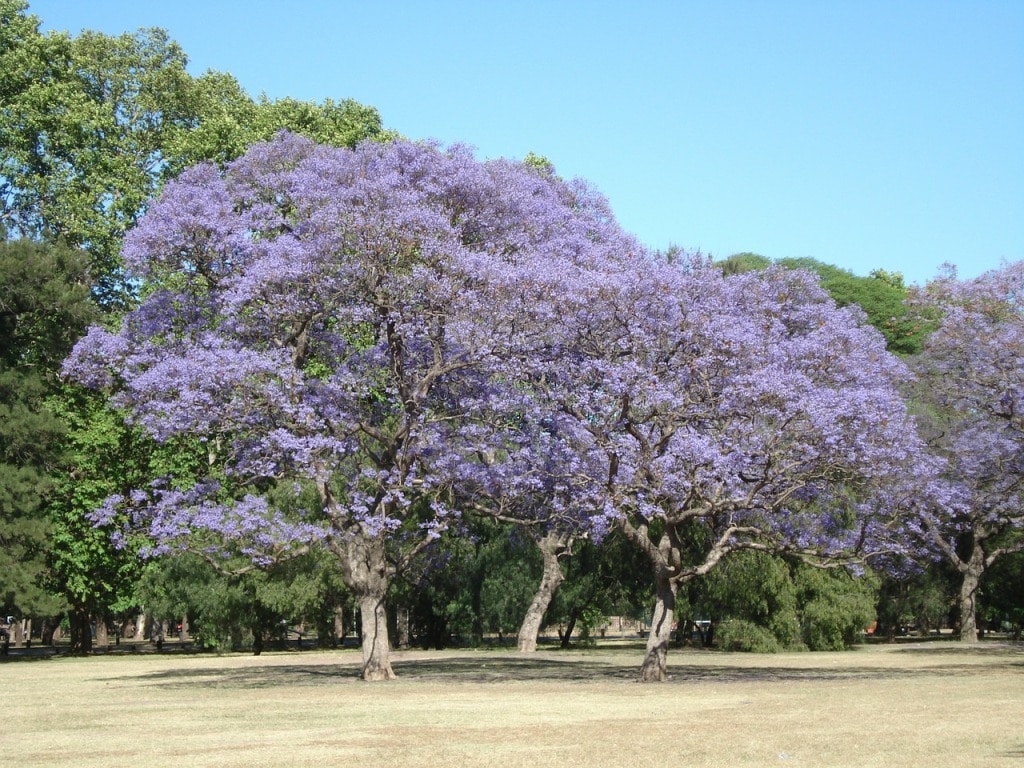
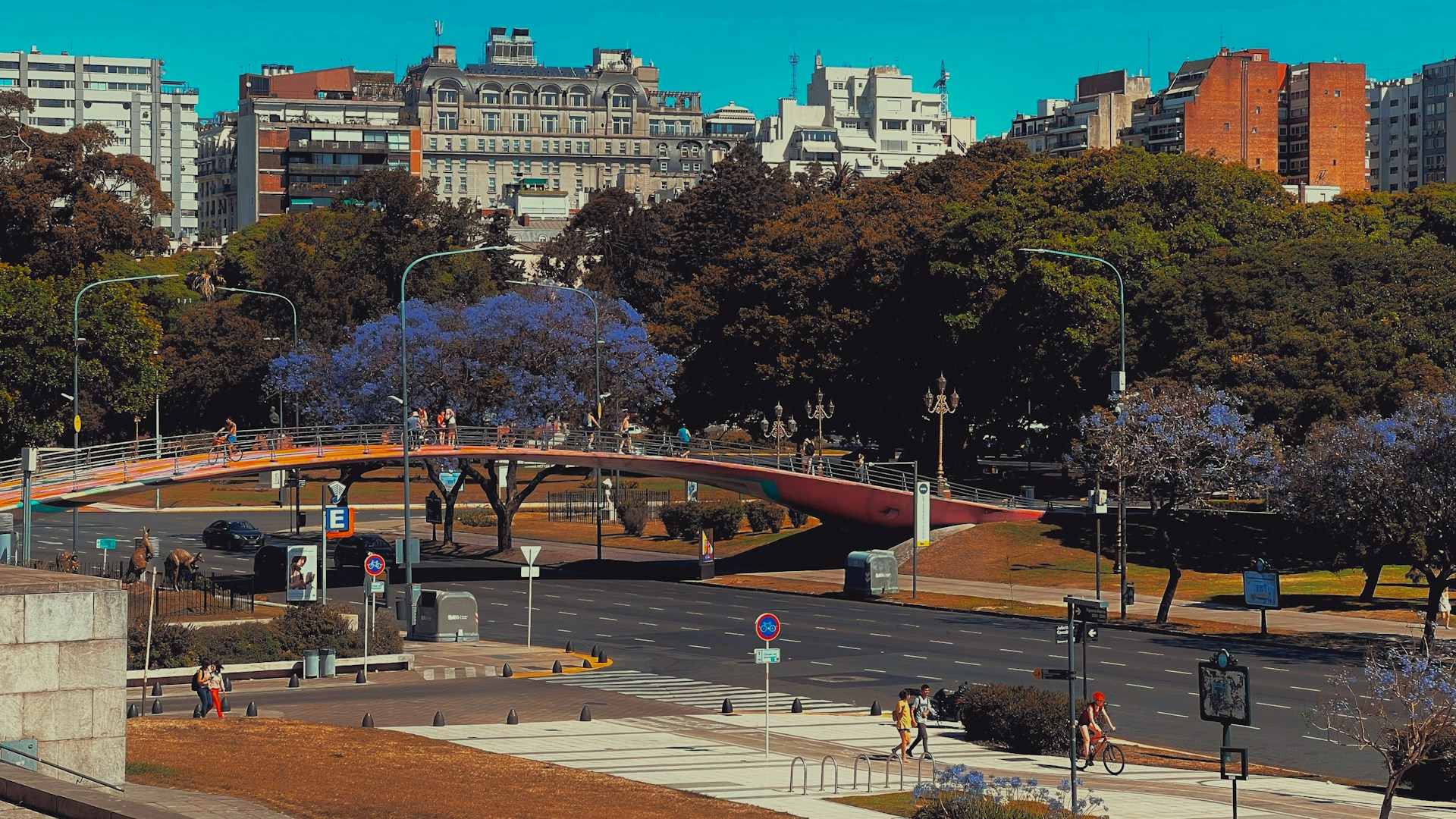
Many visitors are familiar with the Jacaranda trees (Jacarandá, Jacaranda mimosifolia), bursting with purple blooms in late November, covering entire avenues like Avenida Sarmiento in Palermo with violet carpets. However, there are many other species — and, actually, there’s a thoughtful plan behind it. Unfortunately, this plan covers mainly the northern and northwestern neighborhoods rather than the whole city.
A City Planted with Intention
Before Buenos Aires became a city, this area was mostly covered by grasslands, and along the riverbanks there were trees such as Tala (Celtis tala) and Ceibo (Erythrina crista-galli).
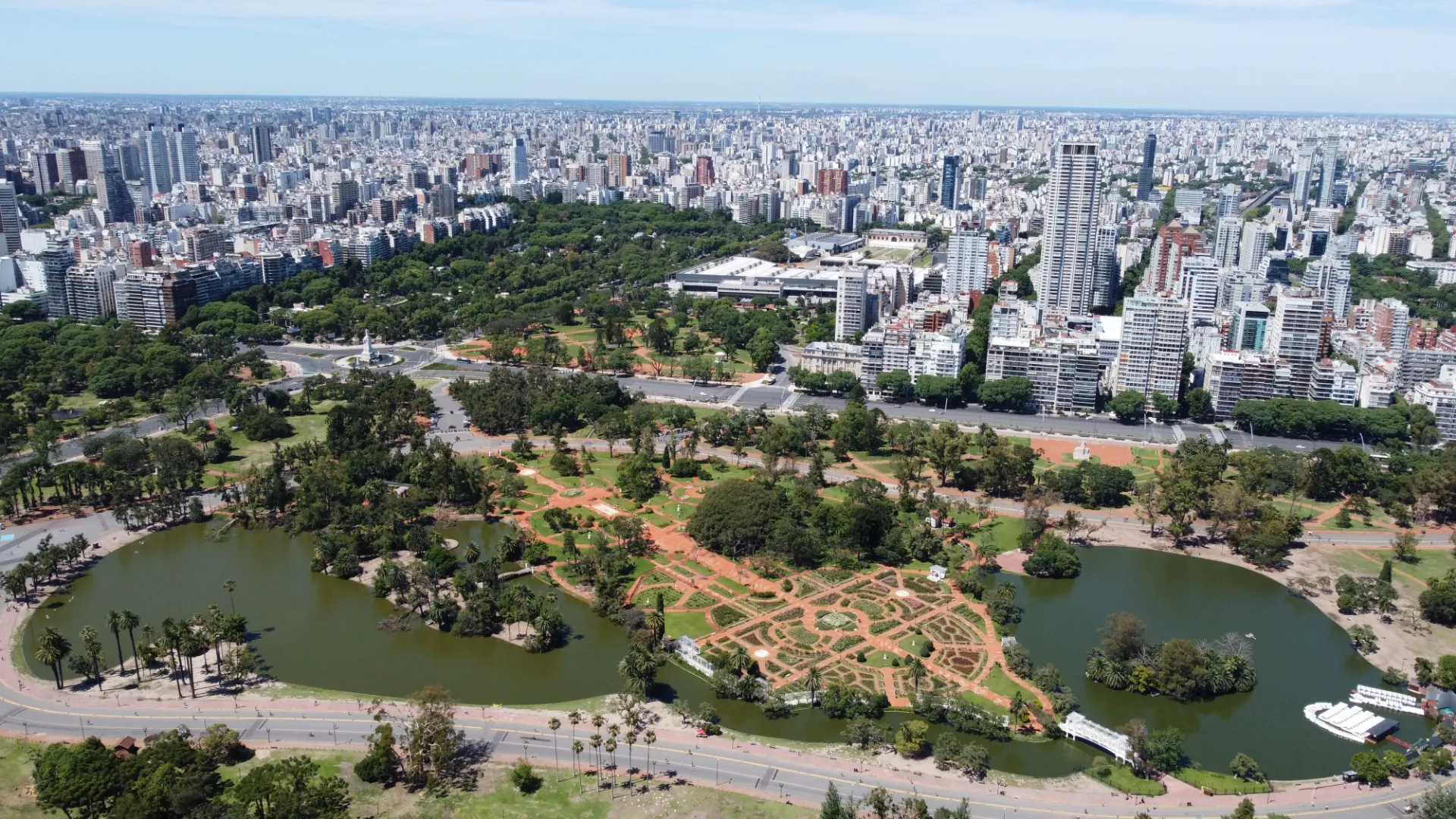
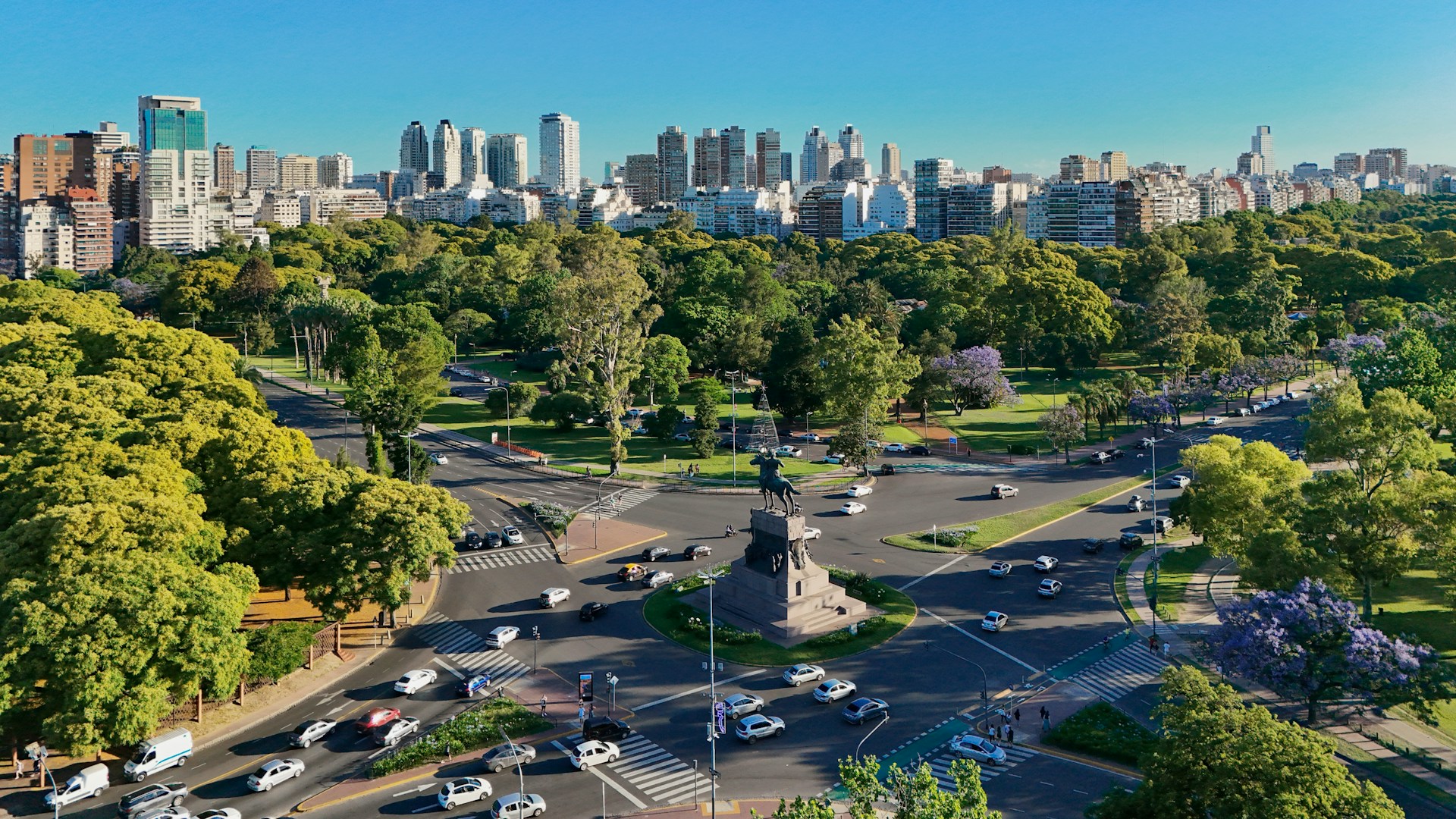
More than three centuries after its foundation, when the city was already an important regional hub, the authorities decided to move forward with “green” policies — introducing trees along the sidewalks and designing new parks. In the late 19th and early 20th centuries, visionary landscape architects such as Charles Thays, a Frenchman who became the city’s head of parks, and his successors designed urban spaces where nature played the leading role. They introduced species that could thrive in the local climate and bring seasonal color, turning half of Buenos Aires into what many call today an urban forest.
Some of the species are native to Argentina, while others were brought from abroad. President Domingo F. Sarmiento also contributed, promoting the planting of trees like the Palo Borracho (Ceiba speciosa) across the city. The Botanic Garden is a great place to learn about this topic!
The Tree Census of Buenos Aires
Today, there are more than 400,000 public trees in Buenos Aires, belonging to over 350 species. The city government has developed a detailed tree census. You can explore it on this interactive map:
Main Tree Species in Buenos Aires
- American Red Ash / Fresno Rojo Americano (Fraxinus pennsylvanica) – about 36% of sidewalks and 4% of parks are forested with this type. Known for its dark bark and brilliant yellow leaves in autumn. I used to have two Fresnos on the sidewalk of my house, and they bring me amazing autumn memories.
- Jacaranda / Jacarandá (Jacaranda mimosifolia) – about 4% of sidewalks and 6% of parks, painting the city purple-blue from late October to early December, mostly in November. This tree is an icon, and children’s songwriter María Elena Walsh even composed a famous song about it! I love the views of the Jacarandas along Sarmiento Avenue, between Santa Fe and Libertador.
- Ficus (Ficus benjamina) – around 6%, with glossy leaves and thick, twisted roots.
- Linden / Tilo (Tilia × moltkei) – about 4% of sidewalks. In December, their flowers release a sweet, summery perfume that fills the air. If you’re walking around Palermo Chico, visit the small plazoleta behind the Instituto San Martiniano and sit on the bench beneath the big Tilo — it’s a peaceful moment!
- Chinaberry / Paraíso (Melia azedarach) – around 4–6%, with lilac flowers and small yellow fruits (not edible) that remain during winter. When I was a child, I used to use these fruits as “municiones” for my gomera (slingshot) and play with my friends.
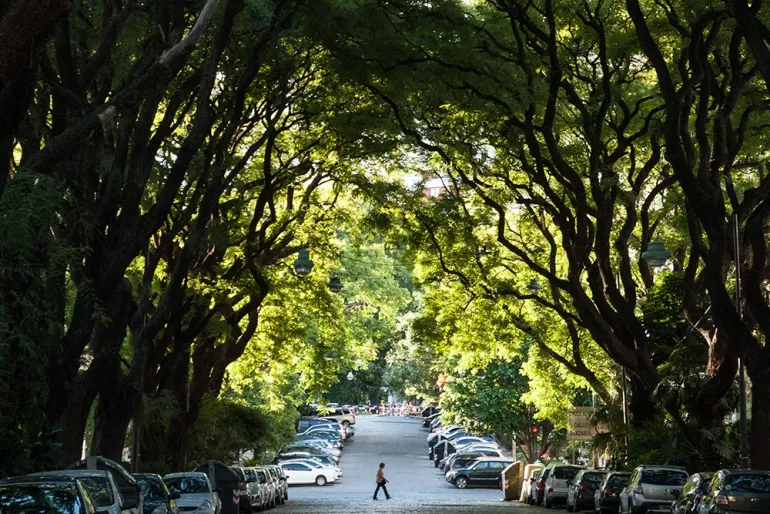
- London Plane / Plátano (Platanus × hispanica) – about 9% of sidewalks and 3% of parks. Their wide canopies dominate the streets of neighborhoods such as Belgrano and Belgrano R. I’m in love with the “green gallery” formed by the trees on Washington and 11 de Septiembre Streets, where they create elegant tunnels of exuberant green in summer. However, their flowers can cause allergic reactions in spring, and the authorities are trying to address this.
- Crape Myrtle / Crespón (Lagerstroemia indica) – around 3%, with pink or violet summer blossoms.
- Golden Ash / Fresno Dorado (Fraxinus excelsior aurea) – about 3%, turning an intense golden-yellow in autumn.
- Tipa Tree / Tipa blanca (Tipuana tipu) – 3% of sidewalks and 8% of parks. Their long, graceful branches form the famous “Túnel de Tipas” on Melián Street, one of my favorite places in the city — a natural cathedral of intertwined trunks and filtered sunlight. In December, their yellow flowers fall and create a golden carpet on the ground. There’s also a small insect that releases drops of liquid from the branches, producing a “raining effect” that makes the experience even more magical.
- Privet / Ligustro (Ligustrum lucidum) – around 2%, often used to shade narrow streets.
Trees Common in Parks
- Palo Borracho / Silk Floss Tree (Ceiba speciosa) – about 6% of parks; introduced during Sarmiento’s presidency at the end of the 19th century. Their trunks have impressive spines on the bark!
- Eucalyptus (Eucalyptus spp.) – less common but still present, towering and fragrant.
- Casuarina (Casuarina cunninghamiana) – about 5% of parks.
- Cypress / Ciprés (Cupressus sempervirens) – around 2%.
- Ceibo / Coral Tree (Erythrina crista-galli) – around 2% of parks, with red blooms shining between spring and summer. It’s the national flower of Argentina and can be seen around Palermo’s lakes and parks.
- Pindó Palm (Syagrus romanzoffiana) – around 2% of parks, including the iconic ones near Plaza de Mayo.
Less Frequent but Beautiful Species
- Ginkgo (Ginkgo biloba) – rare but spectacular; fan-shaped leaves that turn deep golden around April and May.
- Lapacho Rosado (Handroanthus impetiginosus) – pink blossoms that brighten the early spring.
- Ibirá Pitá (Peltophorum dubium) – with yellow flowers in January and February.
- Liquidambar (Liquidambar styraciflua) – brilliant reddish foliage in autumn.
- Maple / Arce (Acer spp.) – similar to the Liquidambar, with orange and red leaves in fall.
- Ombú (Phytolacca dioica) – a giant native from the Pampas, like the one in Recoleta, famous for its massive trunk and shade.
- Gomero (Ficus elastica) – with large glossy leaves and impressive roots, similar in shape to the Ombú.
- Japanese Maple / Arce Japonés (Acer palmatum) – in autumn, its crimson color is breathtaking; you can find many in Belgrano R.
- Willow / Sauce (Salix humboldtiana) – elegant and melancholic, usually near water or parks like Tres de Febrero.
- Espinillo / Aromito (Vachellia caven) – small and spiny, with yellow fragrant flowers, typical of the Pampas.
Custom Tours in Argentina
We’re a local travel agency based in Argentina, offering tailor-made tours in Argentina and Chile for discerning travelers just like you. We’d love to help you design your next experience — so don’t hesitate to contact us for your next adventure!
Related posts & tours:
Let's plan your personalized experience
Beyond BA Latam is a local travel agency based in Argentina that designs personalized tours in Argentina, Chile and Antarctica. We are very proud to work with a knowledgeable team capable to design trips based on your interests and traveling style. We are able to bring you a different and more enjoyable experience.
Related Articles
 Best Walks in Buenos Aires: A Local’s Guide to the City
Hi! I’m Santiago, one of the founders of Beyond BA Latam. I live in Villa Urquiza and work in Palermo Soho, about 6 km away. Whenever I can, I make the journey on foot or by bike, sometimes…
 Best Time to Visit Buenos Aires
Although the “Paris of Latin America” can be enjoyed year-round, autumn and spring are often considered the best seasons to visit Buenos Aires, thanks to their mild weather, colorful landscapes, and…
 What to Do in Buenos Aires for a Week: The Perfect Itinerary
Are you planning a Honeymoon in Argentina? Are you visiting with friends, as a couple, solo, or with family? If you're wondering what to do in Buenos Aires for a week, this itinerary can help you make…
Inspiring Tours
 Argentina and Chile Culture: Discover Art, Architecture & Heritage
Buenos Aires, Purmamarca, Salta, Mendoza and Santiago de Chile
 Mendoza Luxury Holiday & Hiking in Aconcagua Park
Buenos Aires - Bariloche - Mendoza
 Jujuy & Salta - Hiking & Comfort
Salta - Jujuy
 Trek South America's Highlights
Cusco, Santiago de Chile, Puerto Natales, El Calafate, El Chaltén y Buenos Aires
 Tierra del Fuego Hiking Tour
Tierra del Fuego, Ushuaia, Tierra del Fuego National Park, Beagle Channel, Lake Fagnano & Mitre Peninsula
 Sierra Valdivieso Circuit & Tierra del Fuego hiking tour
Ushuaia, Tierra del Fuego, Laguna Esmeralda, Lake Fagnano & Carbajal Valley.
 Darwin Range Patagonia Expedition (Cordillera Darwin)
Ushuaia, Puerto Williams, Beagle Channel, Darwin Range, Gordon Island, Hoste Island, Pia Fjord & Garibaldi Fjord
 Fly the Drake: Antarctic Express
Punta Arenas, King George Island, South Shetland Islands, Antarctic Peninsula, Antarctica & Drake Passage
 Patagonia Trekking Tour: El Calafate & El Chaltén
El Calafate, El Chaltén, Fitz Roy, Cerro Torre, Laguna de los Tres, Laguna Torre, Perito Moreno Glacier, Southern Patagonian Ice Field
 Patagonia Photo Tour
El Chaltén, El Calafate, Fitz Roy, Laguna de los Tres, Laguna Torre, Cerro Torre, Loma del Pliegue del Tumbado, Patagonia
 Argentina Herping Expedition
Buenos Aires, Iguazú Falls, Puerto Iguazú, Misiones, San Sebastián de la Selva, Iberá Wetlands, Posadas
 Patagonia Penguins Tour
Puerto Deseado, Peninsula Valdés, Ushuaia, Tierra del Fuego
Trips by Destination
In the following sections, you'll find tours focused on the main region you want to visit. They include traditional & thematic tours, interesting articles, and relevant information.
- Argentina
Custom-Made Experiences by Locals
 Patagonia
Custom-Made Experiences by Locals
 Chile
Custom-Made Experiences by Locals
 Northwest Argentina Holidays
Custom-Made Experiences by Locals
 Travel to Antarctica
Custom-Made Experiences by Locals
Tours by Travel Style
In the following sections, you'll find tours focused on the main region you want to visit. They include traditional & thematic tours, interesting articles, and relevant information. If your interest is focusing mainly in Chile or Antarctica, please visit our Chile and Antarctica sections.
 Classic Journeys
 Road Trips
 Hiking Adventures
 Wildlife Experiences
 Luxury Escapes
 Foodies
 Honeymoon
 Family Travel
 Cruises