Native Trees of Argentina: A Journey from North to South
The native trees of Argentina tell a story of a country shaped by contrasting climates and extraordinary natural diversity. From the subtropical forests of the northeast to the windswept woodlands…
Argentina’s Natural Heritage, Rooted in Its Trees
The native trees of Argentina tell a story of a country shaped by contrasting climates and extraordinary natural diversity. From the subtropical forests of the northeast to the windswept woodlands of Patagonia, they provide shelter for wildlife, connect local communities with their traditions, and give each region its distinctive character. You might notice the brilliant flowers of a ceibo, walk beneath lenga trees on a Patagonian trail, or admire the unusual silhouette of a pehuén, also known as the monkey puzzle tree. Learning to recognise these species adds another dimension to your travels, turning a forest walk into a closer encounter with Argentina’s natural heritage. As you explore this guide, you’ll discover some of Argentina’s most remarkable native trees, uncover the stories behind them, and learn where to see them on your journey.
Northern Argentina: Native Trees of Lush Forests and Wild Wetlands
From subtropical forests to the dry woodlands of the Chaco, Northern Argentina is home to an extraordinary variety of native trees. Discover how these species thrive in a region shaped by warm climates, abundant waterways, and dramatic seasonal changes.
Palo Rosa: A Giant of the Misiones Forest
The palo rosa (Aspidosperma polyneuron) rises above the surrounding vegetation, making it one of the most impressive trees in Argentina’s subtropical forests. Its tall trunk and high crown reveal the scale of a mature forest, encouraging visitors to look beyond the dense undergrowth and towards the canopy.
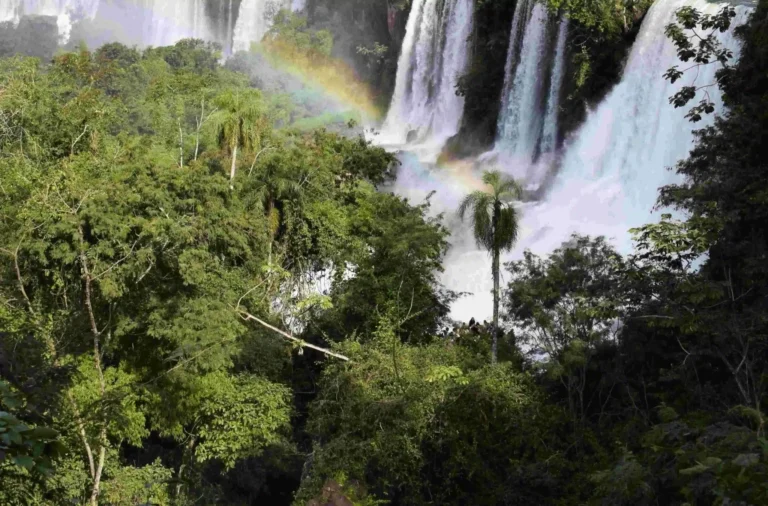
🌳 Where to see it: In Argentina, its natural distribution is concentrated in northern Misiones, including Iguazú National Park. A guided forest walk can help you identify this towering species among its neighbours.
Araucaria Misionera: A Towering Tree of the Atlantic Forest
The araucaria misionera (Araucaria angustifolia), also known as pino Paraná, stands out for its tall, straight trunk and distinctive crown, which develops an umbrella-like shape as the tree matures. Although related to the pehuén of Patagonia, it is a different species, native to the Atlantic Forest region of South America.
🌳 Where to see it: Discover it in northeastern Misiones, particularly around San Pedro and Cruce Caballero Provincial Park, where surviving native stands reveal another side of Argentina’s subtropical forests.
Yerba Mate: The Tree Behind Argentina’s Favourite Tradition
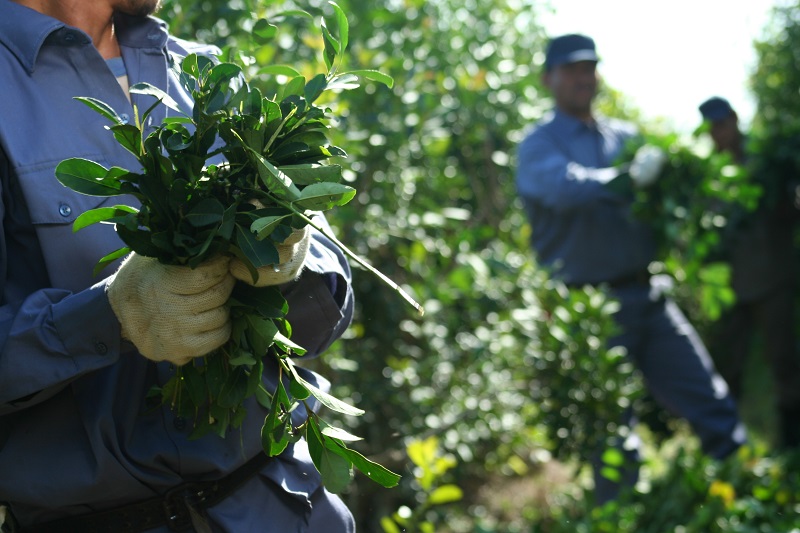
The yerba mate (Ilex paraguariensis) is an evergreen tree native to the subtropical Atlantic Forest. Its leaves are harvested and processed to prepare mate, the much-loved infusion that brings people together throughout Argentina. Although cultivated plants are pruned to make harvesting easier, wild trees can grow considerably taller.
🌳 Where to see it: Visit Misiones and northeastern Corrientes, Argentina’s main yerba-producing areas, where plantations and producer visits offer a closer look at the journey from leaf to cup.
Lapacho: A Spectacular Display of Flowers
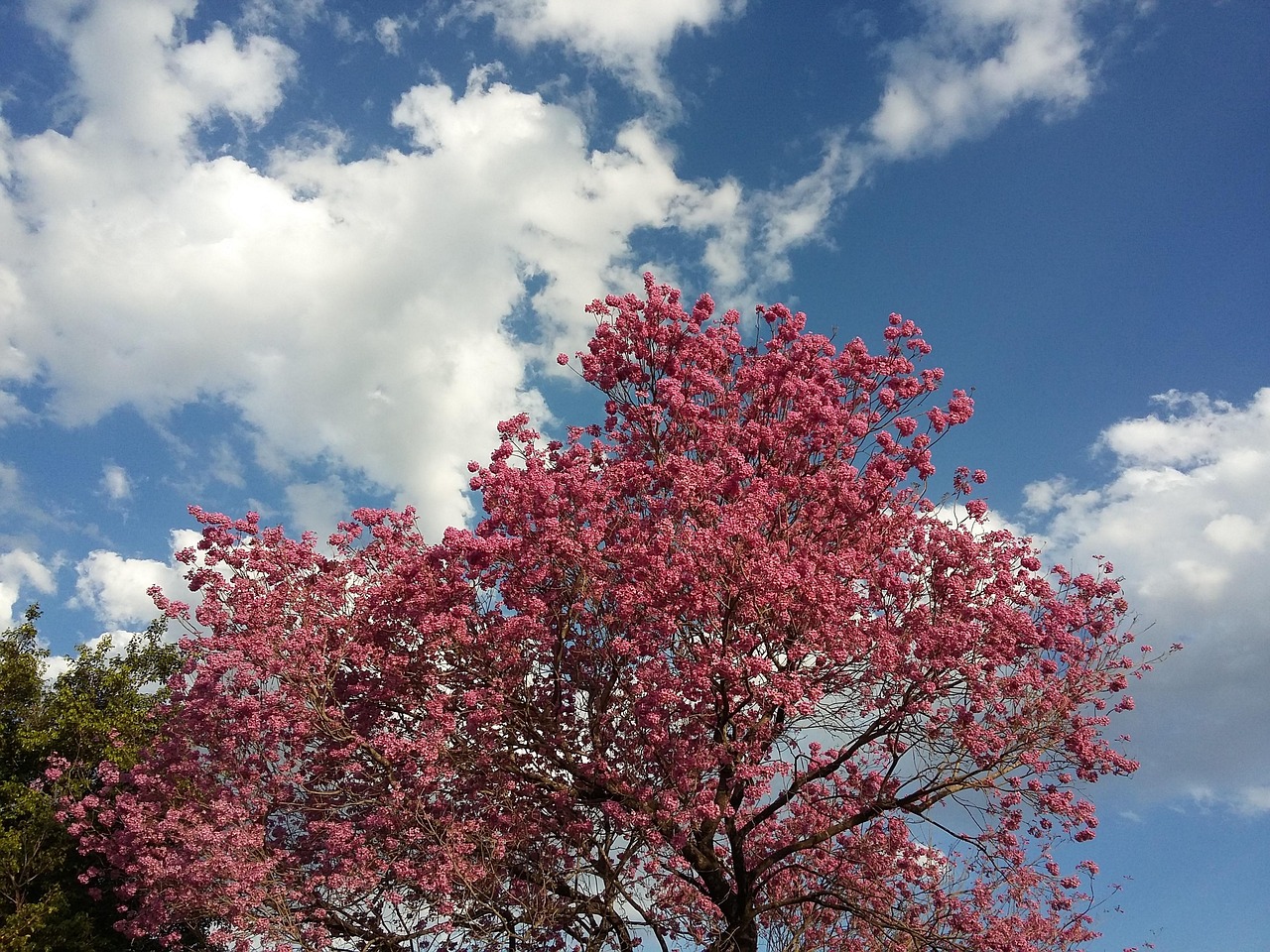
The lapacho brings vibrant colour to northern Argentina, with pink or yellow blossoms depending on the species. Its flowers often appear before the new leaves, transforming the branches into striking floral displays. Several native species share this common name, each with its own distribution and characteristics.
🌳 Where to see it: Look for lapachos in northern Argentina’s forests and in planted streets, squares, and gardens across the country.
Quebracho Colorado: The Strength of the Chaco
The quebracho colorado is one of the defining trees of Argentina’s Chaco forests. Its name refers to its exceptionally hard wood, while “colorado” describes its reddish colouring. More than one species shares this common name, including the quebracho colorado chaqueño and santiagueño. Historically valued for timber and tannins, these trees also form an important part of the region’s natural heritage.
🌳 Where to see it: Explore protected Chaco woodlands, including Chaco National Park, where quebracho forests are a characteristic feature.
Mistol: Sweet Fruits of the Northern Woodlands
The mistol (Sarcomphalus mistol, also known as Ziziphus mistol) is a native tree of Argentina’s dry northern forests, recognised by its thorny branches and small, rounded fruits. When ripe, these turn reddish-brown and are traditionally eaten fresh or used in regional preparations such as arrope, a thick, sweet syrup. Its connection to local food traditions makes it an interesting species for travellers keen to discover the flavours of northern Argentina.
🌳 Where to see it: Look for mistol in the Gran Chaco, including the dry woodlands of Santiago del Estero, Chaco, and Formosa.
Chañar: Peeling Bark and Sweet Traditions
The chañar (Geoffroea decorticans) stands out for its peeling bark, which reveals greenish tones beneath, and its small yellow flowers. Adapted to dry environments, this native tree also produces sweet fruits traditionally used to prepare arrope de chañar, a thick syrup that connects local food traditions with the surrounding woodland.
🌳 Where to see it: Look for chañar across northern and central Argentina, with its distribution extending from Jujuy into northern Patagonia.
Yatay: Native Palms Beneath Open Skies
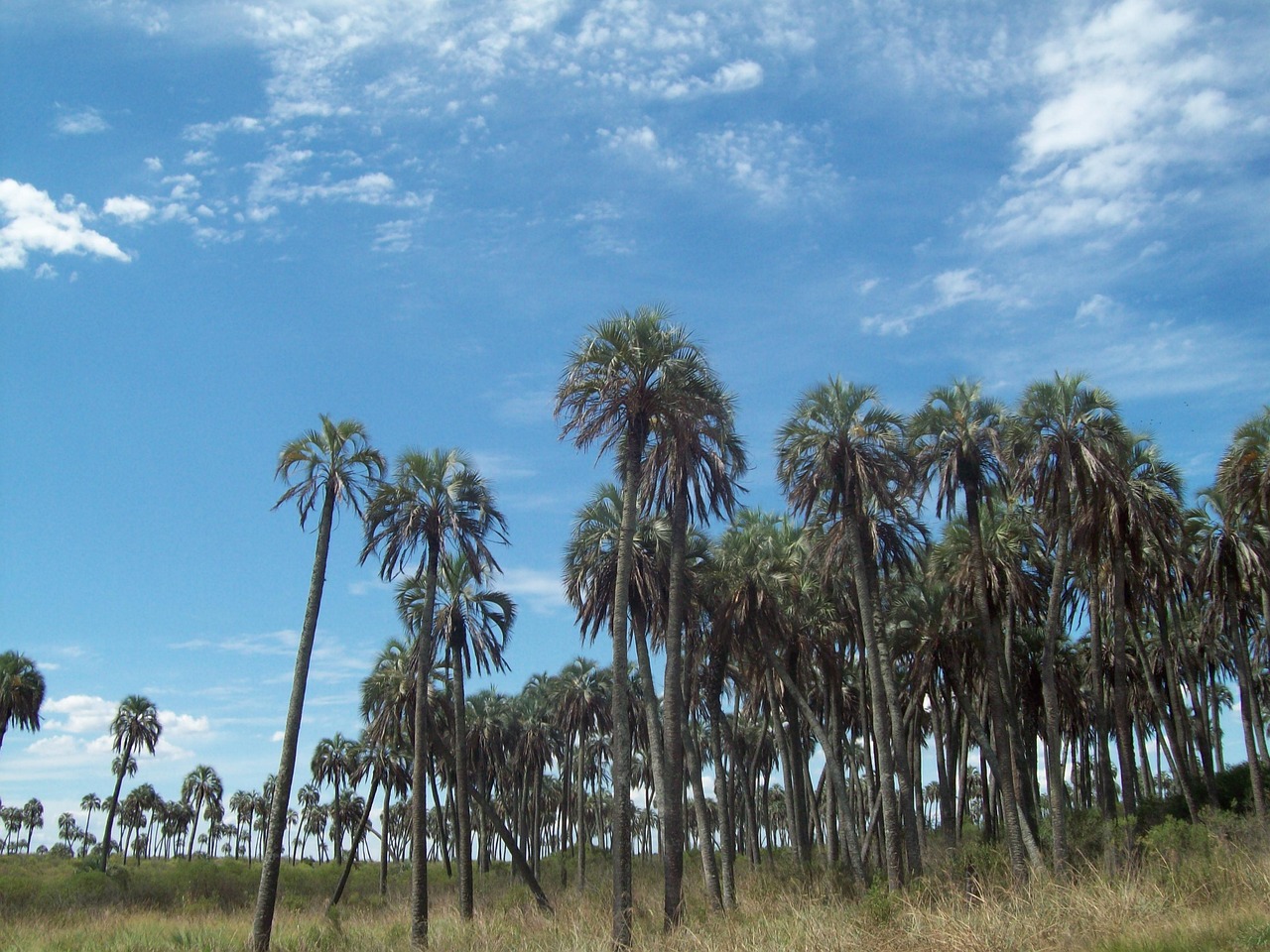
The yatay (Butia yatay) is a native palm whose tall trunk and arching fronds create a distinctive silhouette above open grasslands. Growing in sandy soils, it forms groves known as palmares, a striking contrast to Argentina’s dense forests and mountain woodlands. Its fruits are also used locally in products such as juices, liqueurs, and ice cream.
🌳 Where to see it: El Palmar National Park, in Entre Ríos, protects an important example of these palm groves, with walking trails that invite visitors to explore this distinctive landscape.
Central Argentina: Native Trees of the Pampas and Sierras
The native trees of Central Argentina grow across open grasslands, dry woodlands, riverbanks, and mountain slopes. Explore the plants and landscapes that define the region, where each habitat supports trees uniquely adapted to its soils, rainfall, and changing seasons.
Jacarandá: Violet Blossoms with Northern Roots
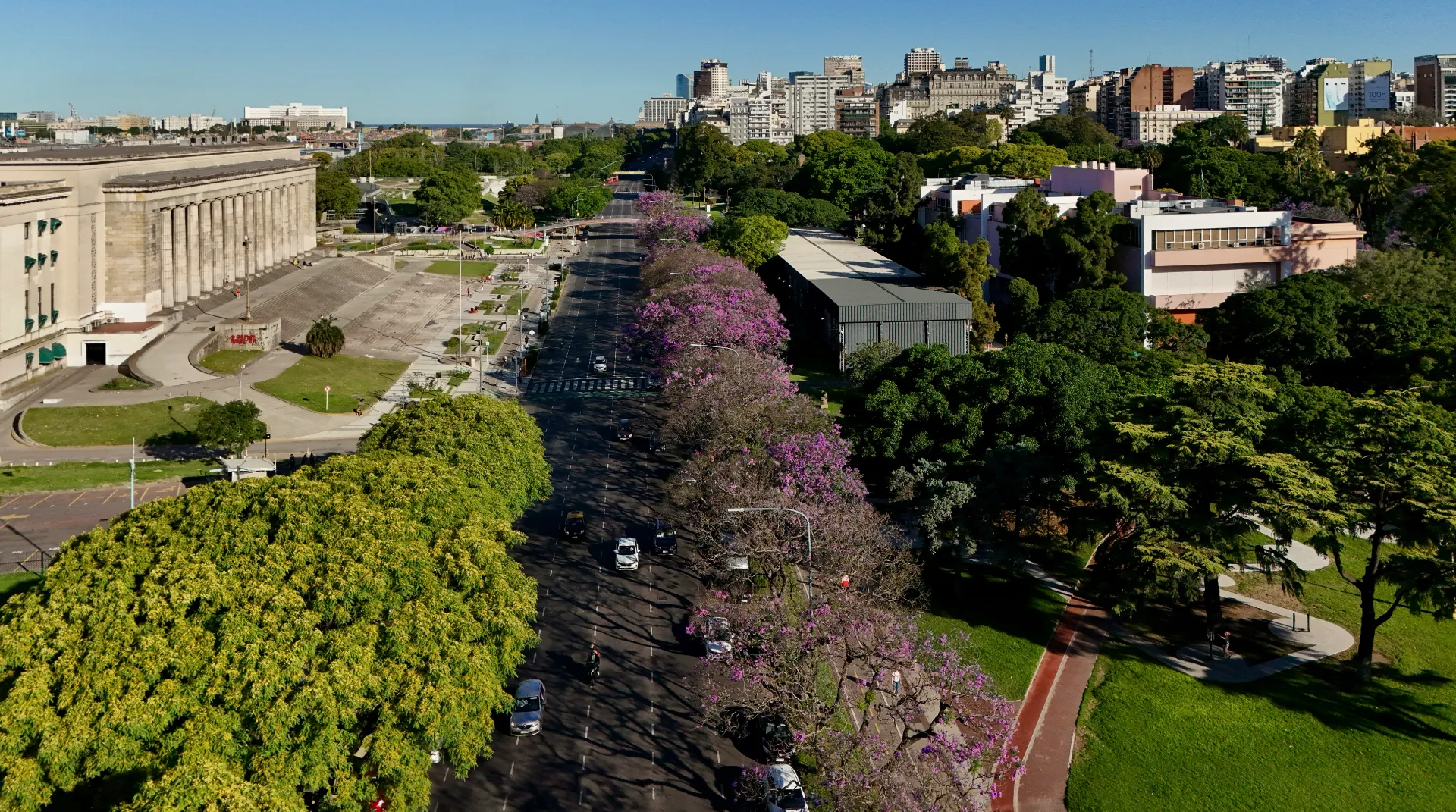
Few trees are as closely associated with Buenos Aires as the jacarandá (Jacaranda mimosifolia), whose violet-blue flowers brighten the city in spring. Yet its Argentine roots lie farther north, in the subtropical forests of the Yungas. Its delicate, fern-like foliage makes it attractive even outside the flowering season.
🌳 Where to see it: Discover its native environment in northwestern Argentina, or admire cultivated trees along Buenos Aires’ streets and in its parks. These urban specimens show how a tree native to one Argentine region can become an emblem of another.
Tipa: Golden Flowers and Shady Avenues
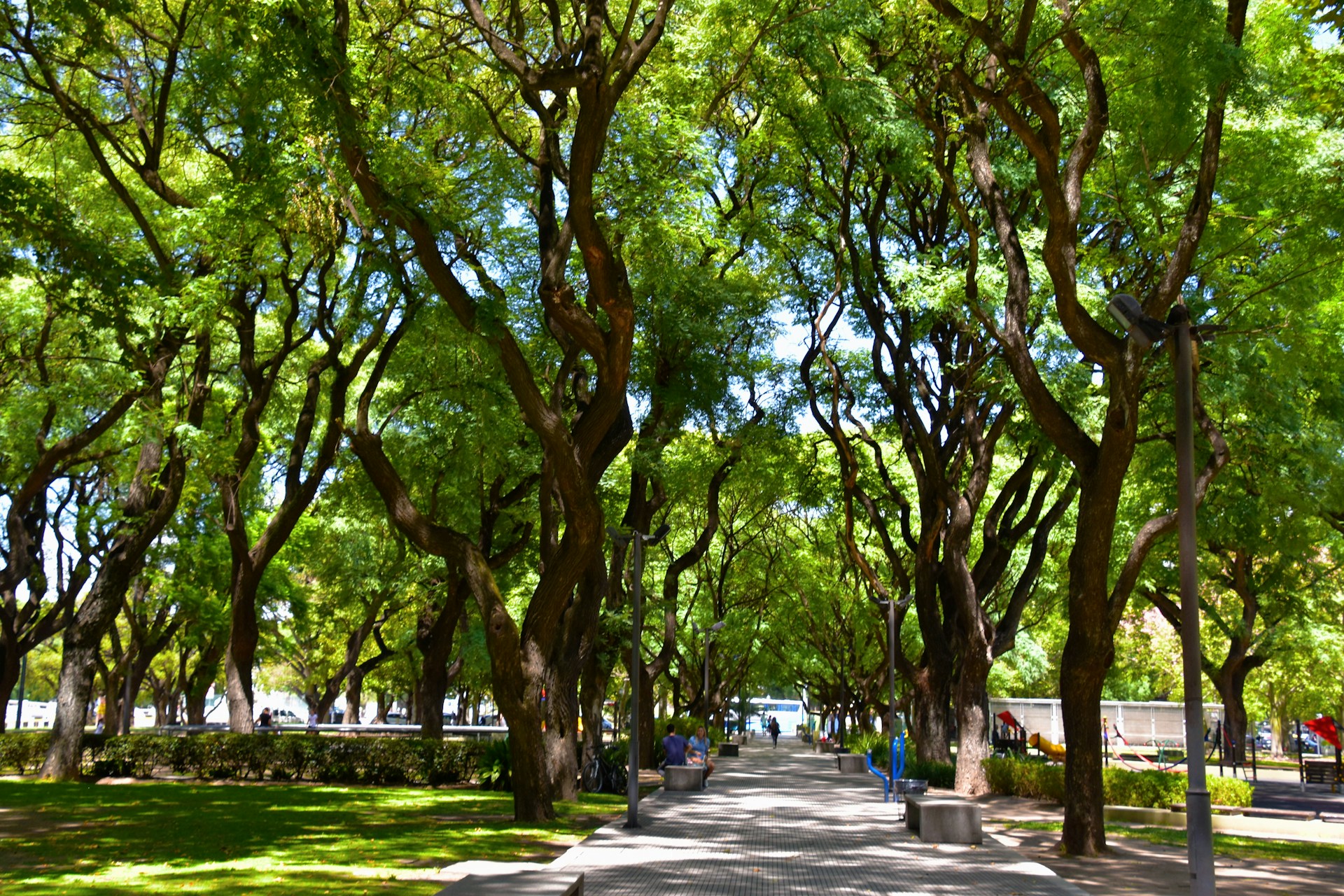
The tipa (Tipuana tipu) is a large native tree whose spreading branches form inviting canopies over streets and gardens. Its yellow flowers add seasonal colour, scattering across the ground beneath the trees. Native to northwestern Argentina and Bolivia, it has become a much-loved feature of Buenos Aires, where cultivated specimens help shape the city’s leafy character.
🌳 Where to see it: Discover tipas in northwestern Argentina or admire their arching branches along the streets and in the parks of Palermo and Belgrano in Buenos Aires.
Ceibo: The Tree Behind Argentina’s National Flower
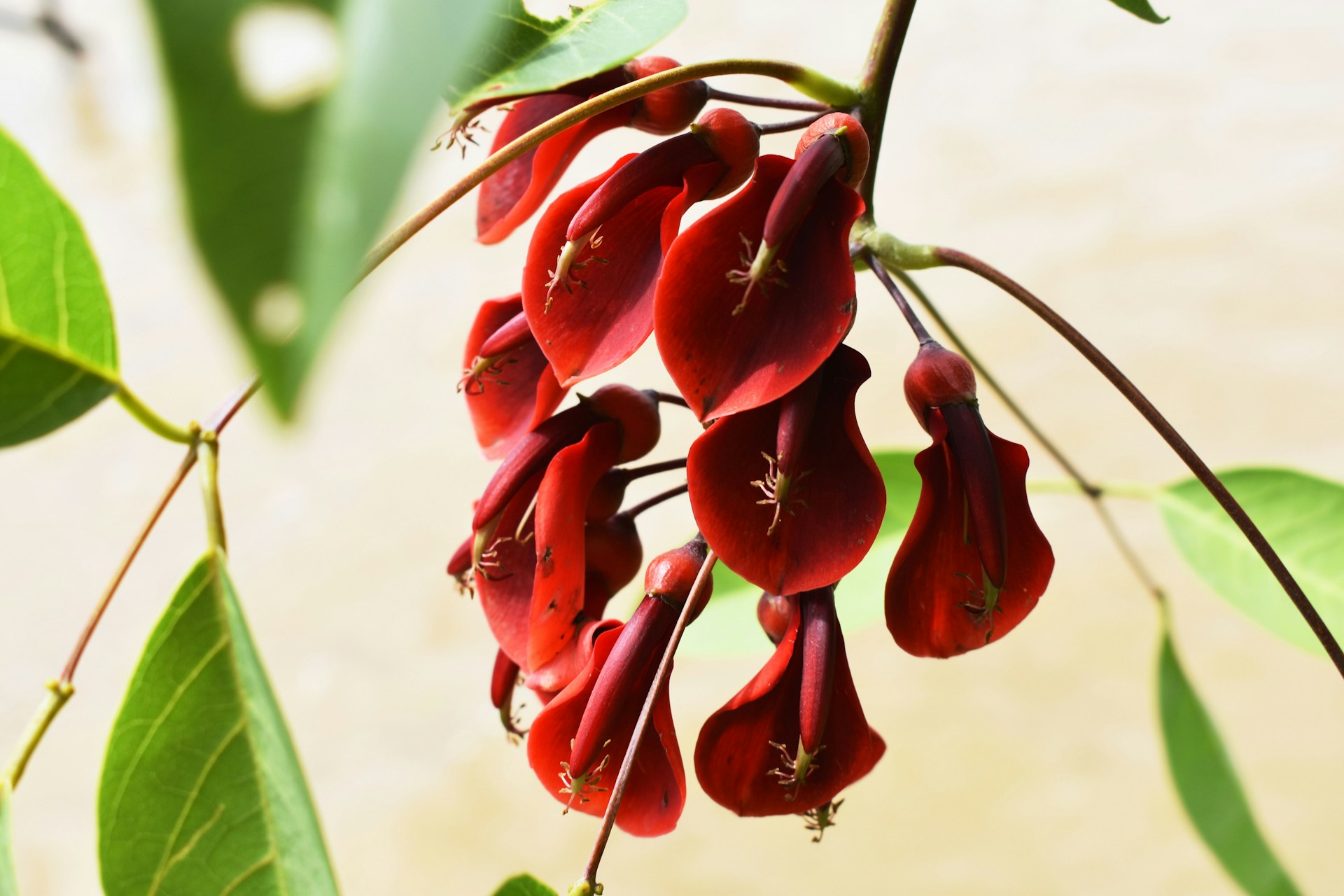
With its striking red flowers, the ceibo (Erythrina crista-galli) holds a special place in Argentine identity: its blossom is the country’s national flower. It grows naturally in moist environments, particularly along waterways, and its spreading branches bring colour to riverside landscapes.
🌳 Where to see it: Look for ceibos in northeastern and riverine Argentina, including the Paraná Delta. Planted specimens also appear in parks and gardens in Buenos Aires.
Palo Borracho: A Sculptural Trunk and Pink Flowers
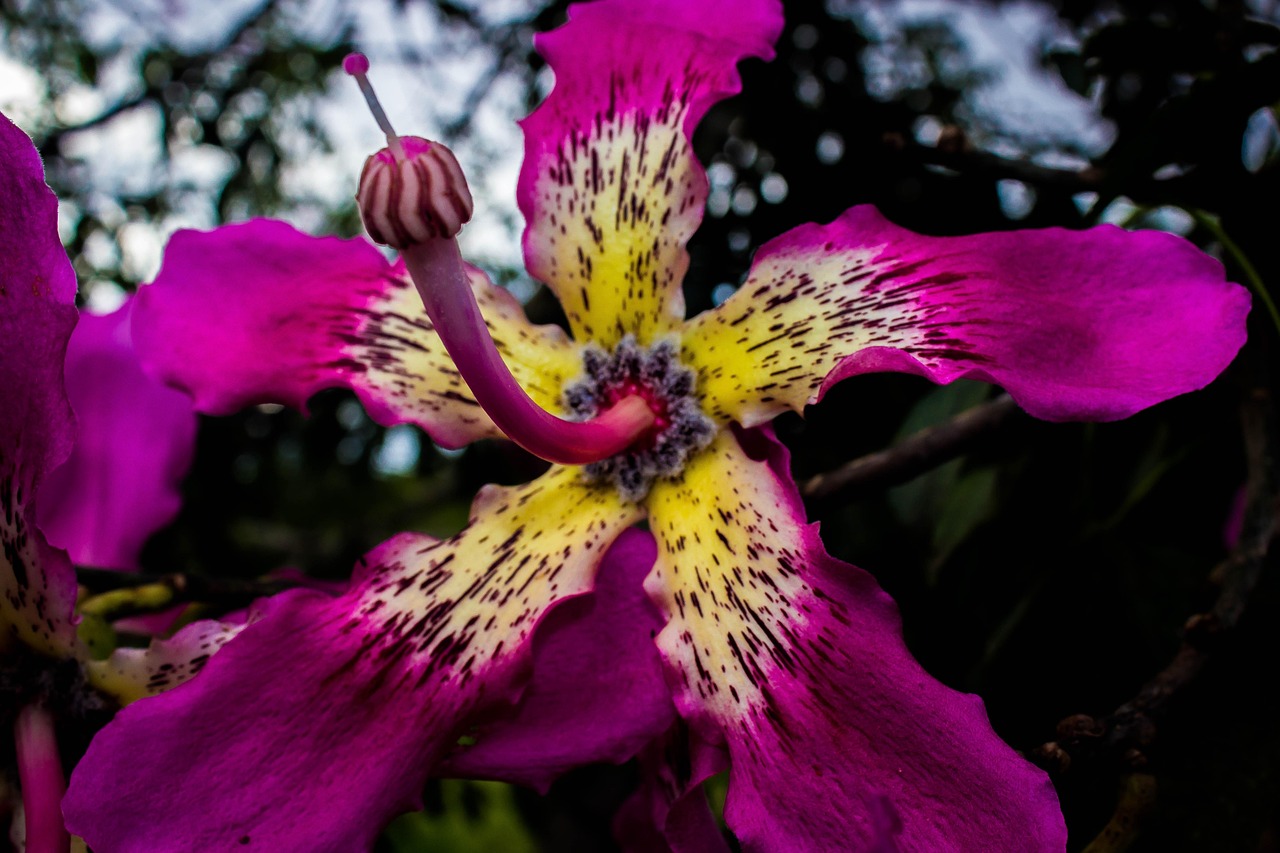
The pink-flowered palo borracho (Ceiba speciosa) is easy to recognise thanks to its swollen, often prickly trunk and large pink blossoms. Also called the silk floss tree, it produces capsules containing silky fibres around its seeds. Native to northeastern Argentina and neighbouring countries, it is also widely planted as an ornamental tree.
🌳 Where to see it: Look for it in northeastern Argentina and in urban green spaces, including Buenos Aires’ parks and squares. Its distinctive trunk makes it an interesting discovery even when it isn’t flowering.
Algarrobo: Shade, Food, and Local Traditions
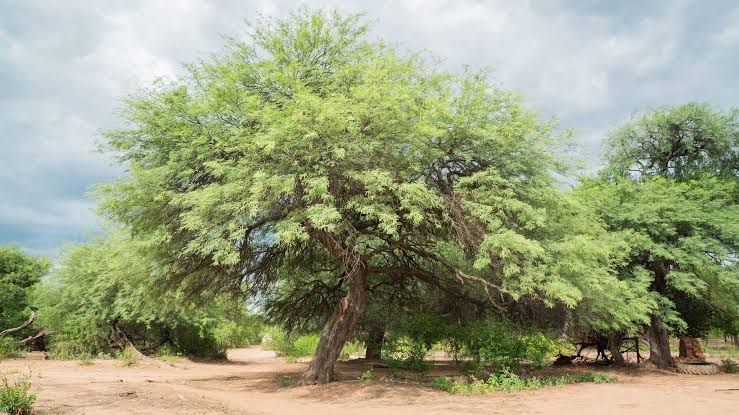
In Argentina, algarrobo refers to several native species, including the white and black algarrobo. These trees grow in environments ranging from the Chaco to the Espinal and Monte, offering shade and producing pods traditionally used to make flour, drinks, and regional foods. They are different from the Mediterranean carob tree, which shares the same Spanish common name.
🌳 Where to see it: Look for algarrobos in the dry woodlands of northern, central, and western Argentina.
Espinillo: Golden Flowers in Open Woodlands
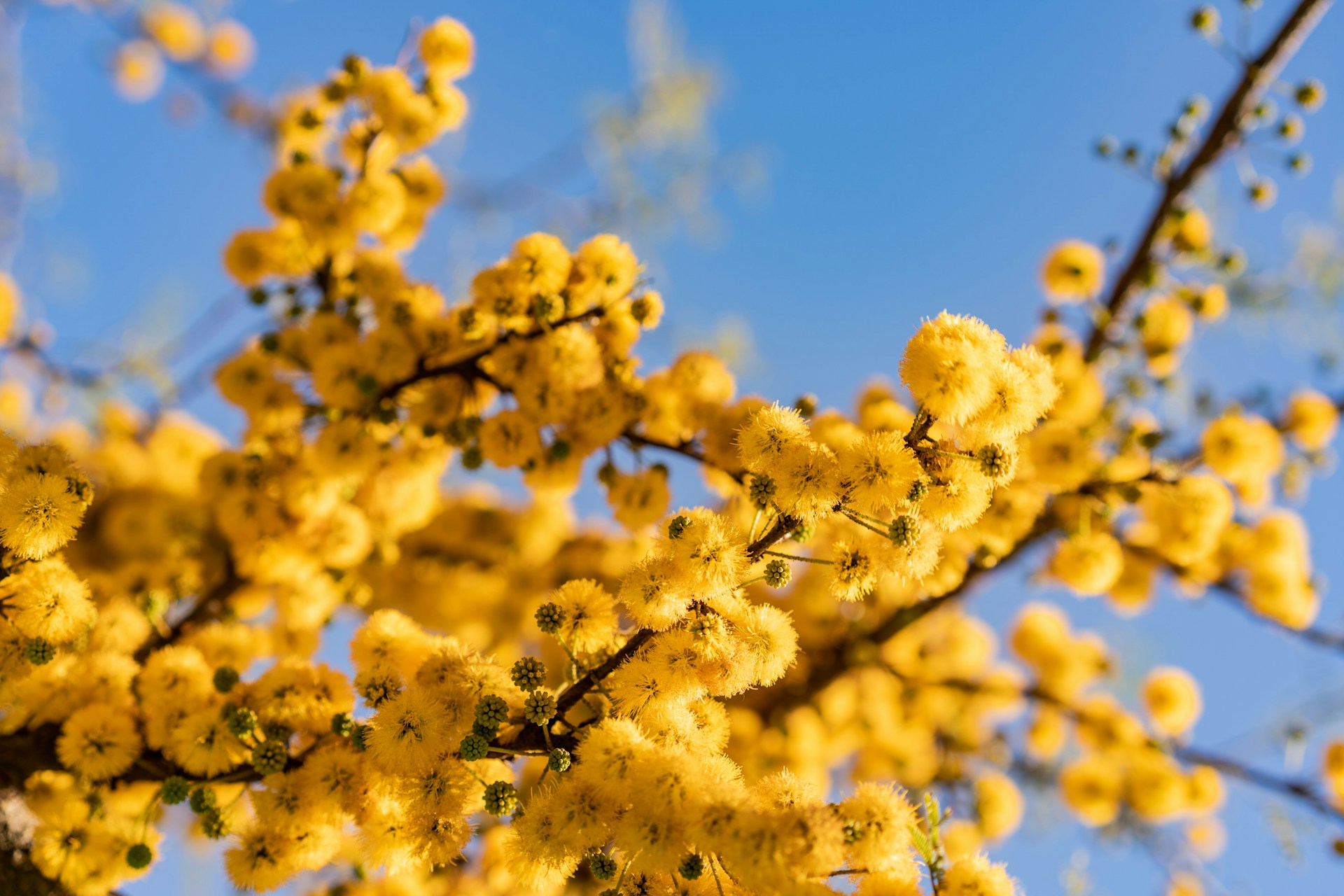
The espinillo (Vachellia caven) is a small, thorny native tree recognised by its rounded, fragrant yellow flowers. When in bloom, its golden clusters brighten open woodlands and grassland margins. Its modest size makes it easy to overlook outside the flowering season, but it contributes an important layer to these habitats.
🌳 Where to see it: Look for espinillos in central and northeastern Argentina, including woodland edges in Buenos Aires Province.
Aguaribay: Graceful Branches and Colourful Fruits
The aguaribay is recognised by its gracefully drooping branches, narrow leaflets, and clusters of pinkish-red fruits. Its airy canopy gives it a distinctive appearance in dry landscapes, while its aromatic foliage adds another identifying feature. Native to parts of northern and central Argentina, it is also planted beyond its natural range.
🌳 Where to see it: Look for aguaribays in northern and central Argentina, as well as in parks and gardens where they are cultivated for shade and ornamental appeal.
Ombú: A Familiar Symbol of Argentina’s Countryside
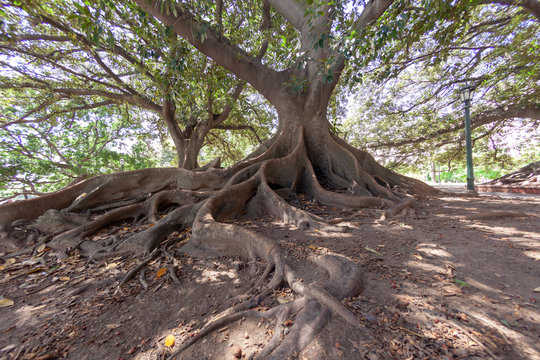
The ombú (Phytolacca dioica) is instantly recognisable by its massive trunk, spreading base, and broad canopy. Its generous shade has made it a familiar presence in rural landscapes and a lasting symbol of the Argentine countryside. Although strongly associated with the Pampas, it is native to northeastern Argentina and neighbouring countries and has been widely planted beyond its natural range.
🌳 Where to see it: Look for ombúes in northeastern Argentina, on traditional estancias, and in parks and squares in Buenos Aires.
Sauce Criollo: A Native Willow Along Argentina’s Waterways
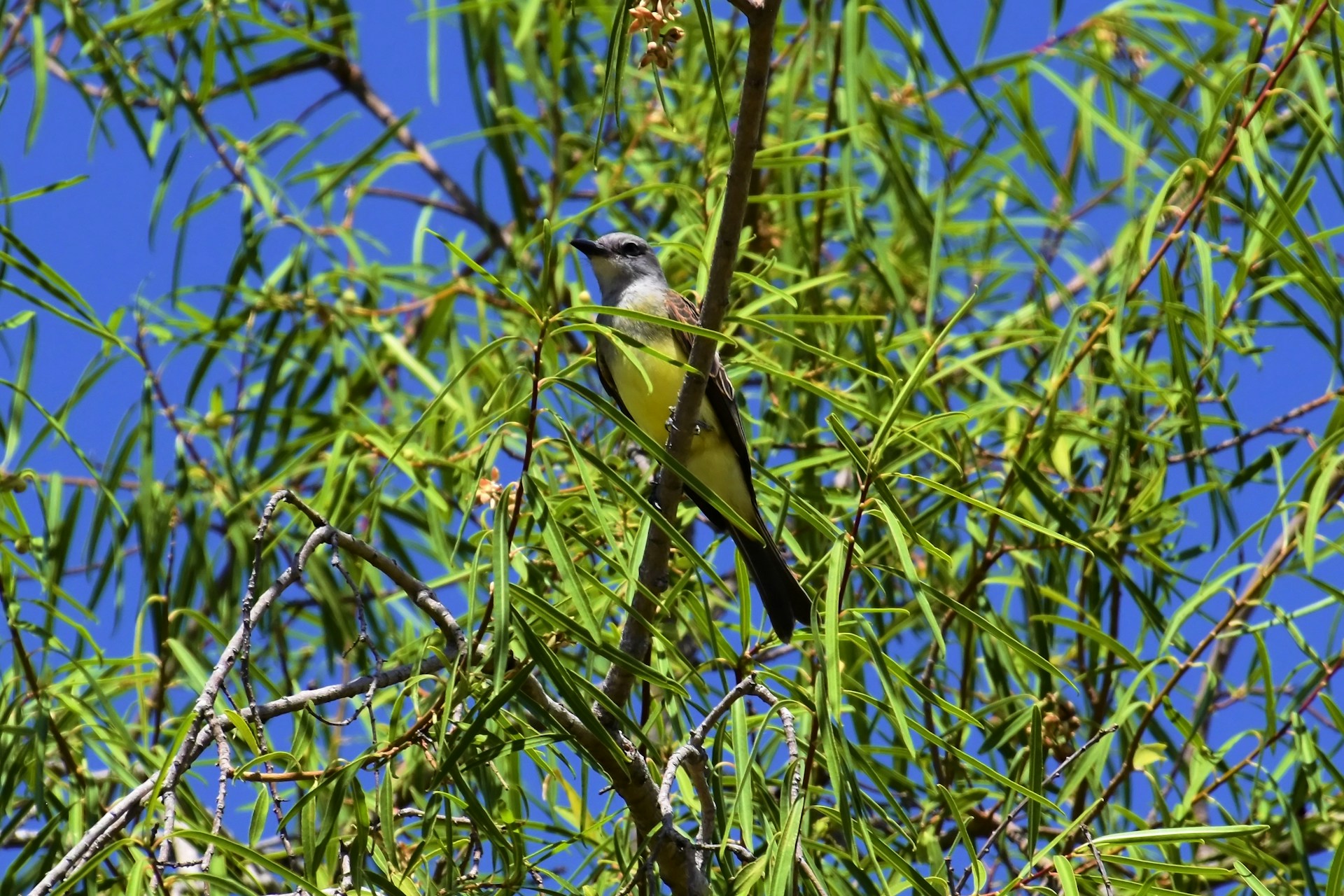
The sauce criollo (Salix humboldtiana) is a native willow recognised by its slender leaves and affinity for water. Growing along rivers and streams, it adds soft greenery to the banks and provides shelter for wildlife. Unlike the introduced weeping willow, this species forms part of Argentina’s native riverside vegetation.
🌳 Where to see it: Look for sauce criollo along waterways in northern and central Argentina, including the Paraná river system, where it contributes to the distinctive scenery of islands and riverbanks.
Southern Argentina: Native Trees of Patagonia’s Forests
Patagonia’s native trees flourish in cool Andean forests, sheltered valleys, and windswept landscapes near the steppe. Discover the hardy species that have adapted to cold temperatures, strong winds, and the changing conditions of southern Argentina.
Pehuén: The Unmistakable Monkey Puzzle Tree
With its thick branches and stiff, pointed leaves, the pehuén (Araucaria araucana) has a silhouette unlike almost any other Argentine tree. Also known as the monkey puzzle tree, this native conifer grows in parts of the Andes in Argentina and Chile. Its large seeds, called piñones, are edible.
🌳 Where to see it: Lanín National Park, in Neuquén, protects pehuén forests that form a memorable part of northern Patagonia’s mountain scenery. Seeing these trees in their natural setting reveals a very different forest from those farther south.
Arrayán: Cinnamon-Coloured Bark by the Lakes
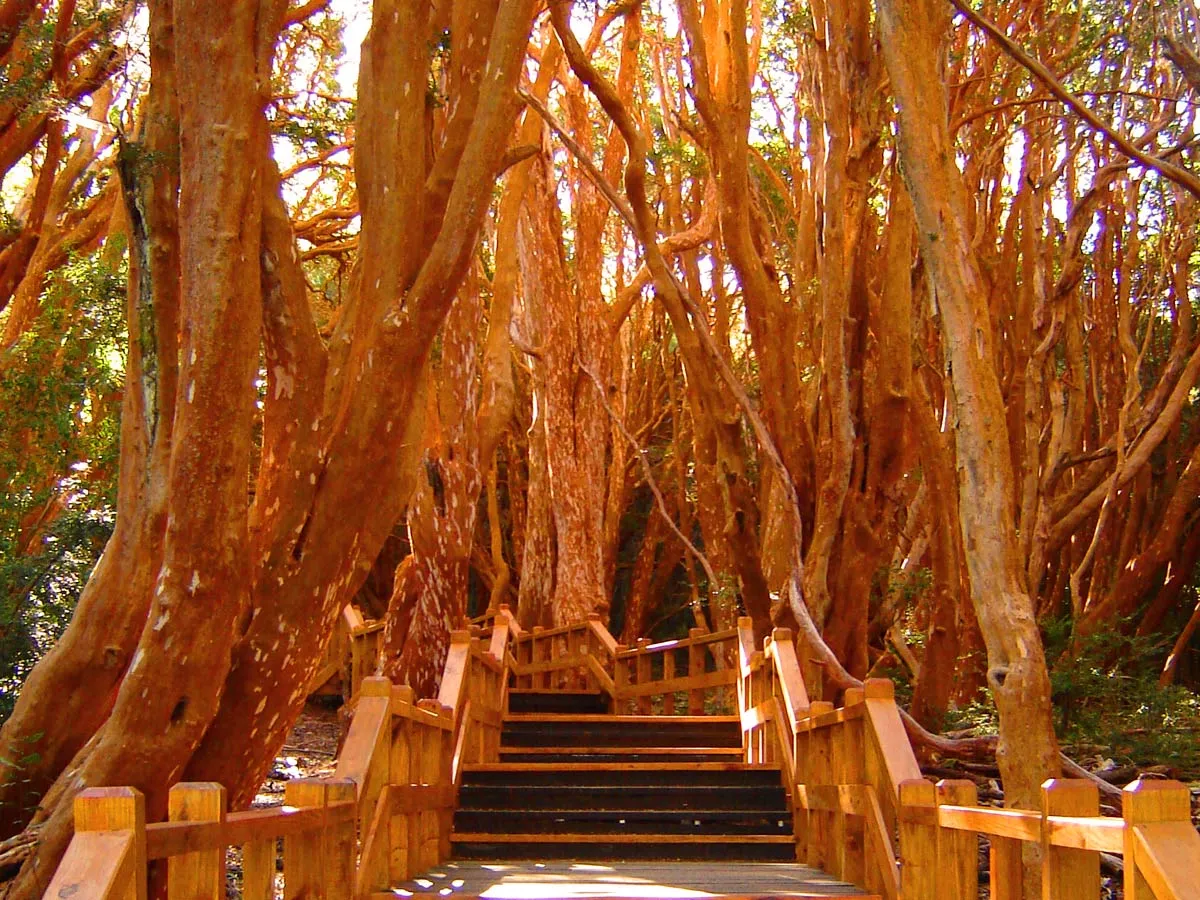
The arrayán (Luma apiculata) stands out for its smooth, cinnamon-coloured bark, often marked by pale patches. Its twisting trunks and evergreen foliage make it one of northern Patagonia’s most recognisable trees. It frequently grows near water, adding warm colours to the edges of cool, clear lakes.
🌳 Where to see it: Los Arrayanes National Park, near Villa La Angostura, is a celebrated place to encounter these trees. Arrayanes also grow in moist areas around the lakes and rivers of Nahuel Huapi National Park.
Ciprés de la Cordillera: A Conifer of the Andean Foothills
The ciprés de la cordillera (Austrocedrus chilensis) is a native conifer that helps define the drier edges of northern Patagonia’s Andean forests. Its evergreen foliage brings year-round colour to rocky slopes and open woodland, often near the transition towards the steppe.
🌳 Where to see it: Explore the forest margins around Nahuel Huapi National Park, where it grows alongside species such as radal and maitén. Its presence helps illustrate how Patagonia’s vegetation changes as rainfall decreases towards the east.
Coihue: An Evergreen Giant of Patagonia
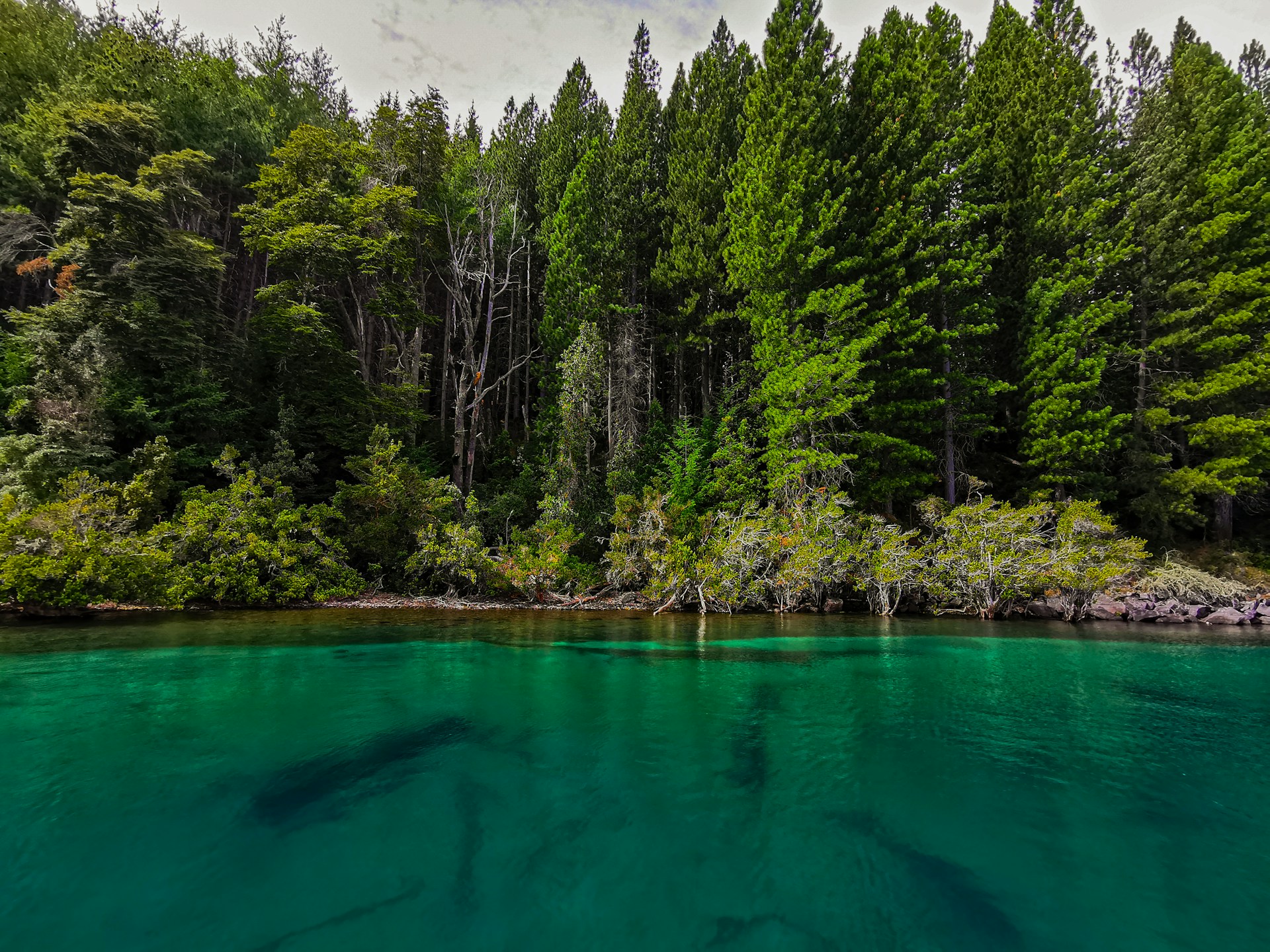
The coihue (Nothofagus dombeyi) is a large evergreen tree that helps shape the forests of Andean Patagonia. Its tall trunk and leafy canopy create shaded woodland environments, contrasting with the open steppe farther east. In wetter areas, it grows alongside other trees characteristic of the temperate rainforest.
🌳 Where to see it: Forests in Nahuel Huapi and Lago Puelo national parks offer opportunities to encounter coihues among lakes, rivers, and mountain scenery. Look up during your walks to appreciate the height and structure of the canopy.
Notro: Scarlet Flowers in Patagonia
The notro (Embothrium coccineum), also known as ciruelillo, adds brilliant red to Patagonia’s forests. Growing as a shrub or small tree, it produces clusters of slender, scarlet flowers, with a particularly striking display in late spring. Its vivid blossoms provide a beautiful contrast to the greens of the surrounding woodland.
🌳 Where to see it: Look for notro in Nahuel Huapi, Lanín, Lago Puelo, Los Aleres, and Tierra del Fuego national parks.
Canelo: An Evergreen with Cultural Significance
The canelo (Drimys winteri) is an evergreen tree with elongated leaves and clusters of small white flowers. Native to Argentina and Chile, it grows in moist southern forests and holds particular cultural and spiritual significance for the Mapuche people.
🌳 Where to see it: Look for canelo in humid Patagonian woodland, including Tierra del Fuego. Learning about this tree offers a chance to connect the region’s vegetation with its cultural heritage.
Guindo: Evergreen Forests at the End of the World
The guindo (Nothofagus betuloides), also known as coihue de Magallanes, is an evergreen southern beech that brings year-round greenery to the wetter forests of southern Patagonia. Unlike lenga and ñire, it retains its small leaves through winter, helping shape the dense woodland scenery of Argentina’s far south.
🌳 Where to see it: Look for guindo in Tierra del Fuego National Park, where forests frame coastal paths and views of the Beagle Channel.
Ñire: A Hardy Tree of Contrasting Conditions
The ñire (Nothofagus antarctica) is another deciduous southern beech, found in a range of Patagonian environments. It can grow as a tree or form low, tangled woodland, depending on local conditions. Like the lenga, it contributes warm seasonal colours to the landscape in autumn.
🌳 Where to see it: Look for ñire in Patagonia’s Andean forests and woodland margins, including areas of Nahuel Huapi National Park. Observing it alongside other trees helps reveal how vegetation changes with moisture, exposure, and altitude.
Lenga: Autumn Colour on Patagonian Trails
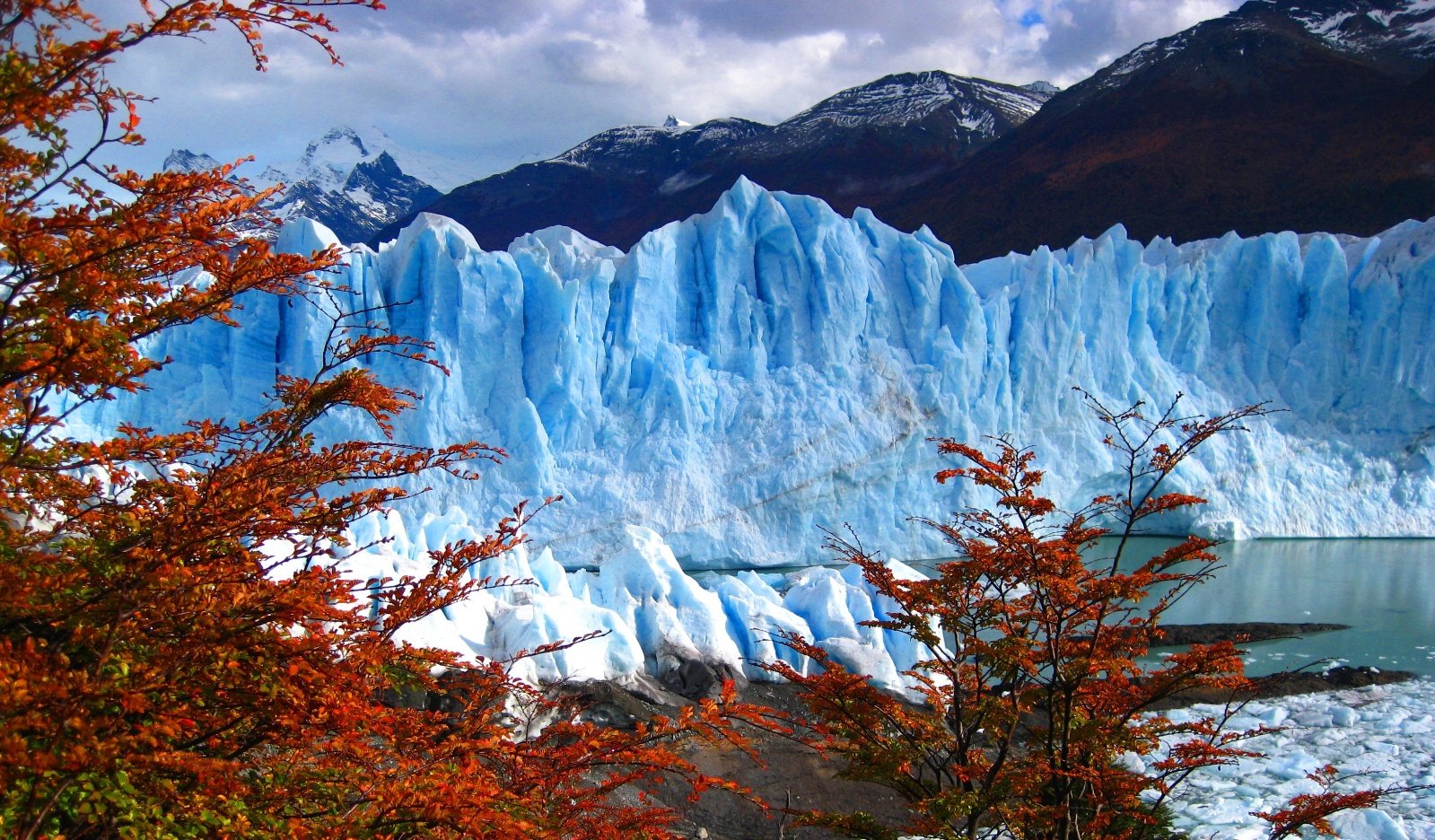
For many hikers, the lenga (Nothofagus pumilio) becomes a familiar companion on Patagonia’s trails. This deciduous southern beech grows in mountain forests, where its foliage changes colour before falling in autumn. Higher on exposed slopes, its growth can become lower and more twisted than in sheltered woodland.
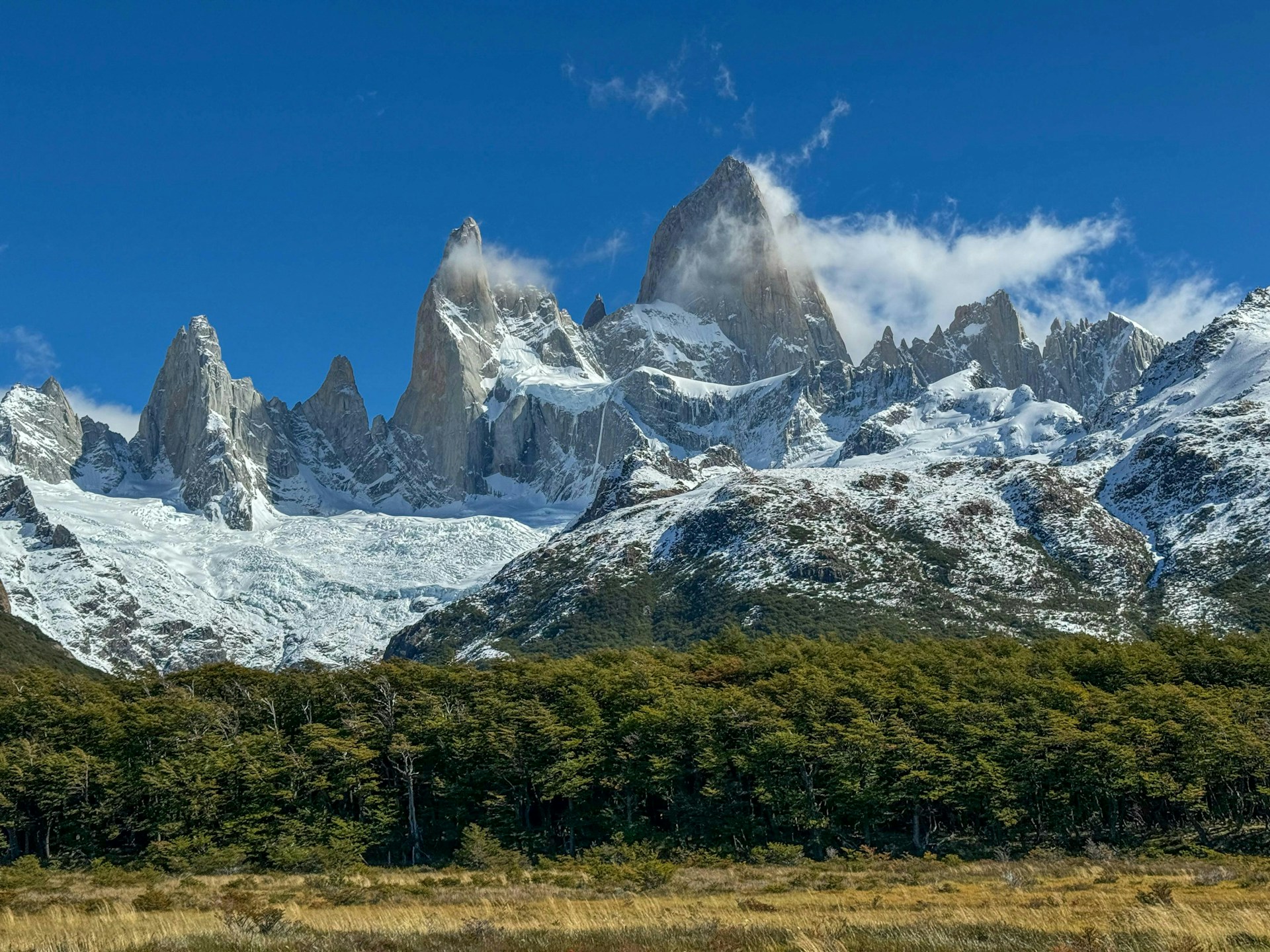
🌳 Where to see it: Lenga forests accompany walks in Los Glaciares National Park around El Chaltén, as well as in Tierra del Fuego. They are an essential part of the forest scenery that makes hiking in southern Argentina so memorable.
Would you like to make nature part of your next adventure?
Get in touch, and we’ll help you create a personalised journey through Argentina’s forests, landscapes and local traditions.
Let's plan your personalized experience
Beyond BA Latam is a local travel agency based in Argentina that designs personalized tours in Argentina, Chile and Antarctica. We are very proud to work with a knowledgeable team capable to design trips based on your interests and traveling style. We are able to bring you a different and more enjoyable experience.
Related Articles
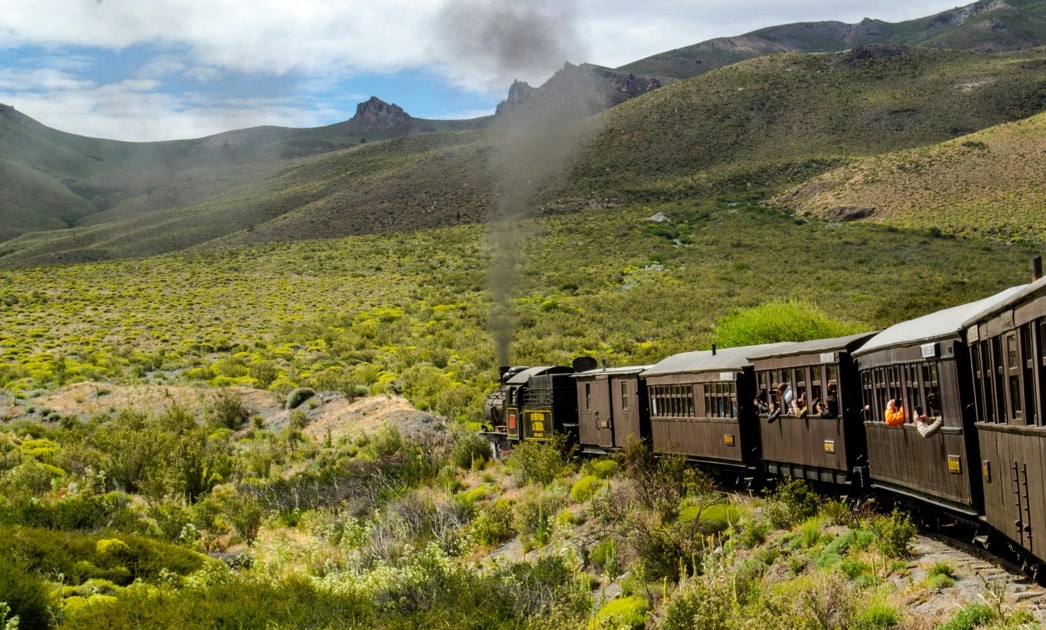 La Trochita – The Old Patagonian Express: A Journey Back in Time
In the heart of Patagonia, La Trochita—officially known as the Old Patagonian Express—invites travelers to step back in time aboard one of Argentina’s most iconic trains. Famous for its vintage…
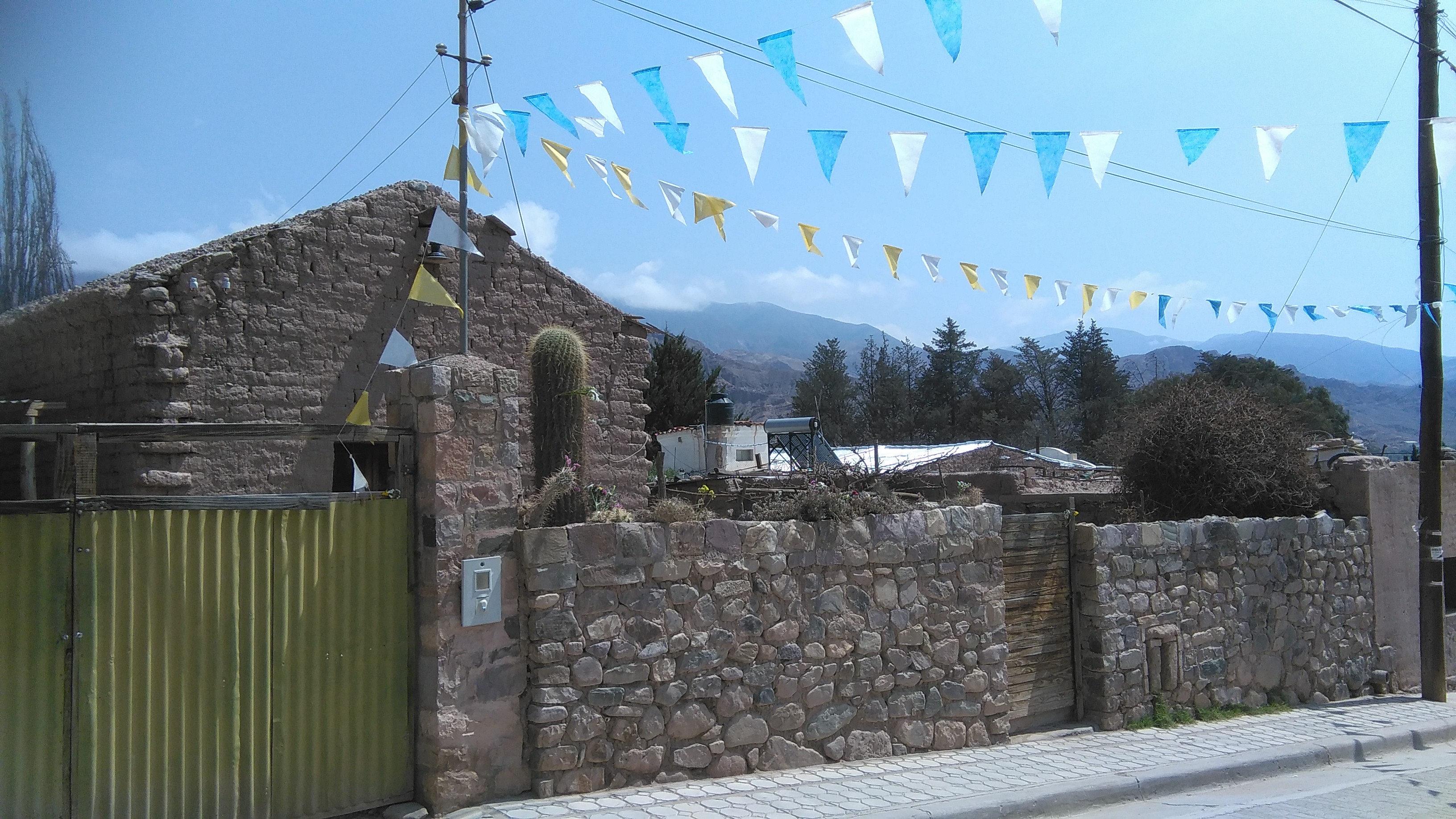 Quebrada de Humahuaca
In northwestern Argentina, the magnificent Quebrada de Humahuaca is known for its breathtaking beauty and extensive cultural history. About 150 kilometers of this canyon are enclosed by soaring…
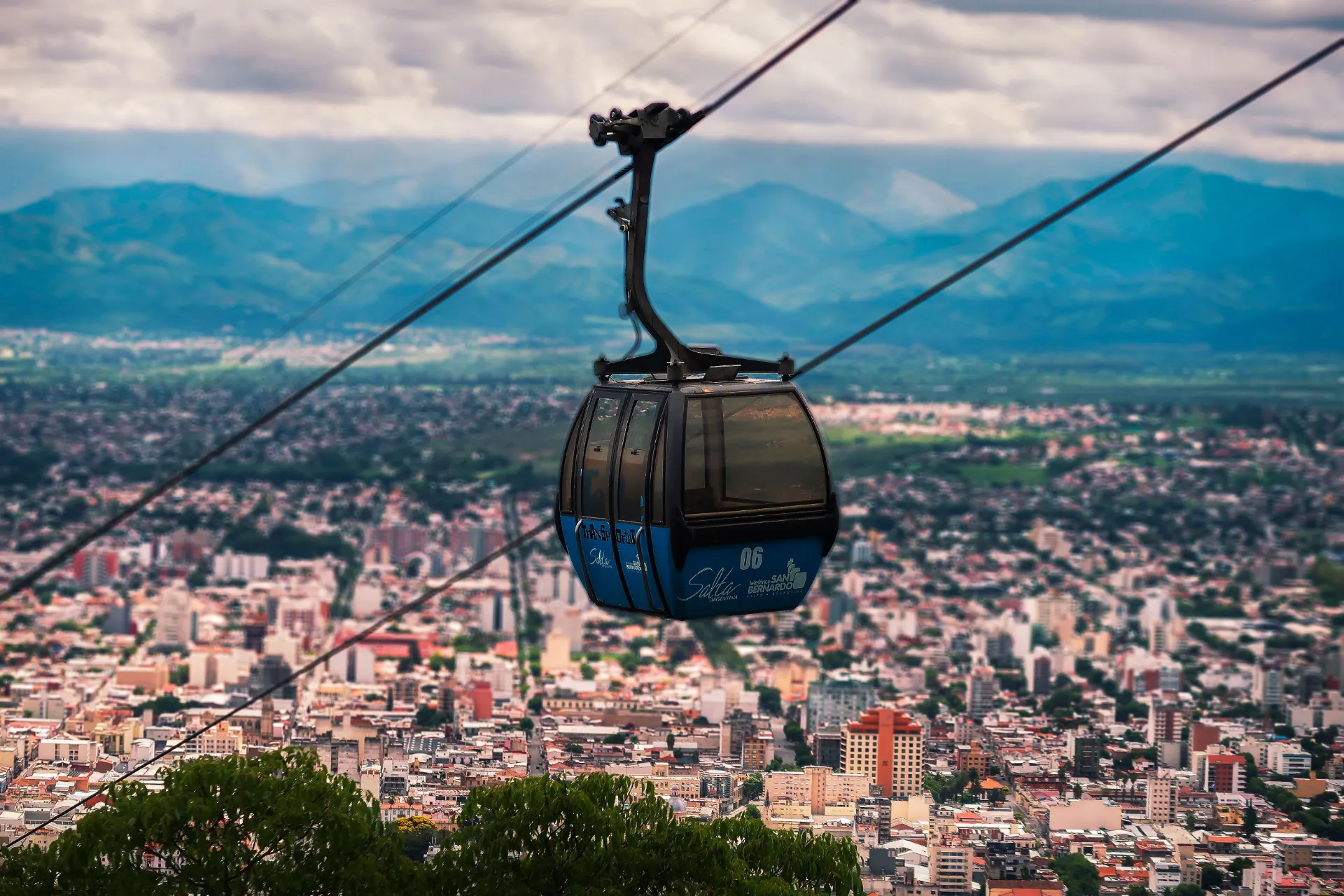 Northwest Argentina: Best Things to Do in Salta and Jujuy
With so many things to do in Salta and Jujuy, planning your trip can feel overwhelming, especially given the region’s vast territory, diverse attractions, and limited travel time. For a first visit…
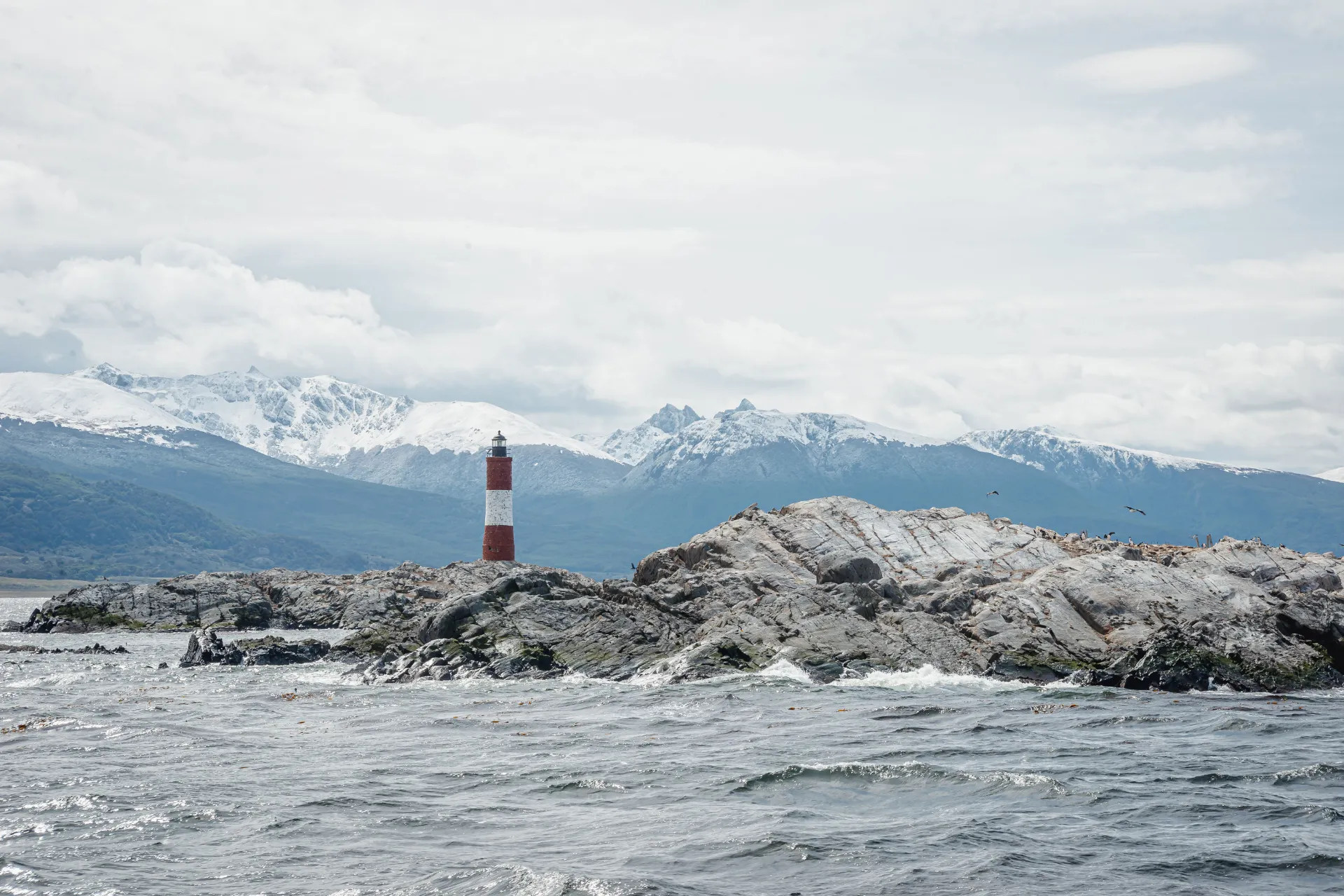 Things to Do in Ushuaia: The Ultimate End-of-the-World Adventure
From exploring the surrounding wilderness to sailing the Beagle Channel, the best Things to Do in Ushuaia go far beyond the city itself. Located at the southern tip of Argentina, Ushuaia is the…
- Esquel: Nature, History, and Adventure in Patagonia
Esquel is a peaceful town in Argentine Patagonia, located at the foot of the Andes and surrounded by lakes, forests, and snow-capped peaks. It’s an excellent base for exploring the stunning Los…
Inspiring Tours
 Patagonia Wildlife Safari
Peninsula Valdés, Puerto Madryn, El Calafate, Torres del Paine National Park & Puerto Natales
 Argentina and Chile Culture: Discover Art, Architecture & Heritage
Buenos Aires, Purmamarca, Salta, Mendoza and Santiago de Chile
 Catamarca, La Rioja, Salta, and Jujuy
La Rioja - Catamarca - Tucumán - Salta - Jujuy
 Northwest Argentina Tour: Salta & Jujuy Itinerary
Salta - Jujuy
 Holidays in Mendoza & Bariloche
Buenos Aires - Mendoza - Bariloche
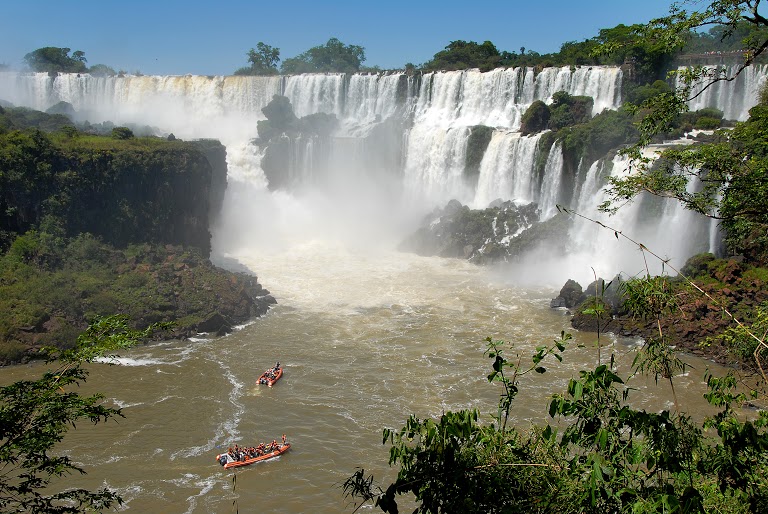 Salta and Jujuy, combined with Iguazu Falls
Buenos Aires - Salta - Jujuy - Iguazú Falls
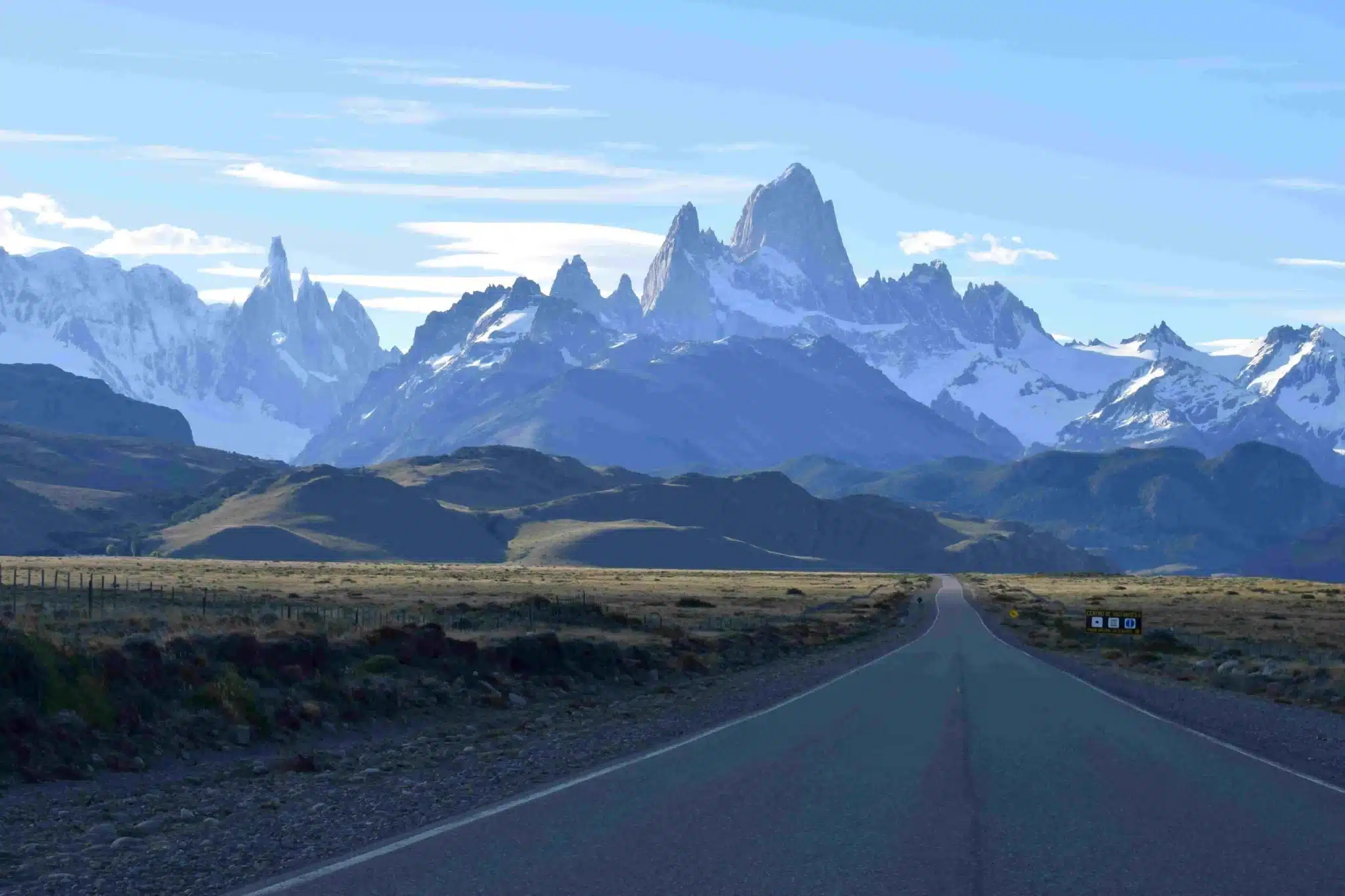 Patagonia Highlights Tour Itinerary
Buenos Aires - Ushuaia - El Calafate - El Chaltén - Torres del Paine - Bariloche
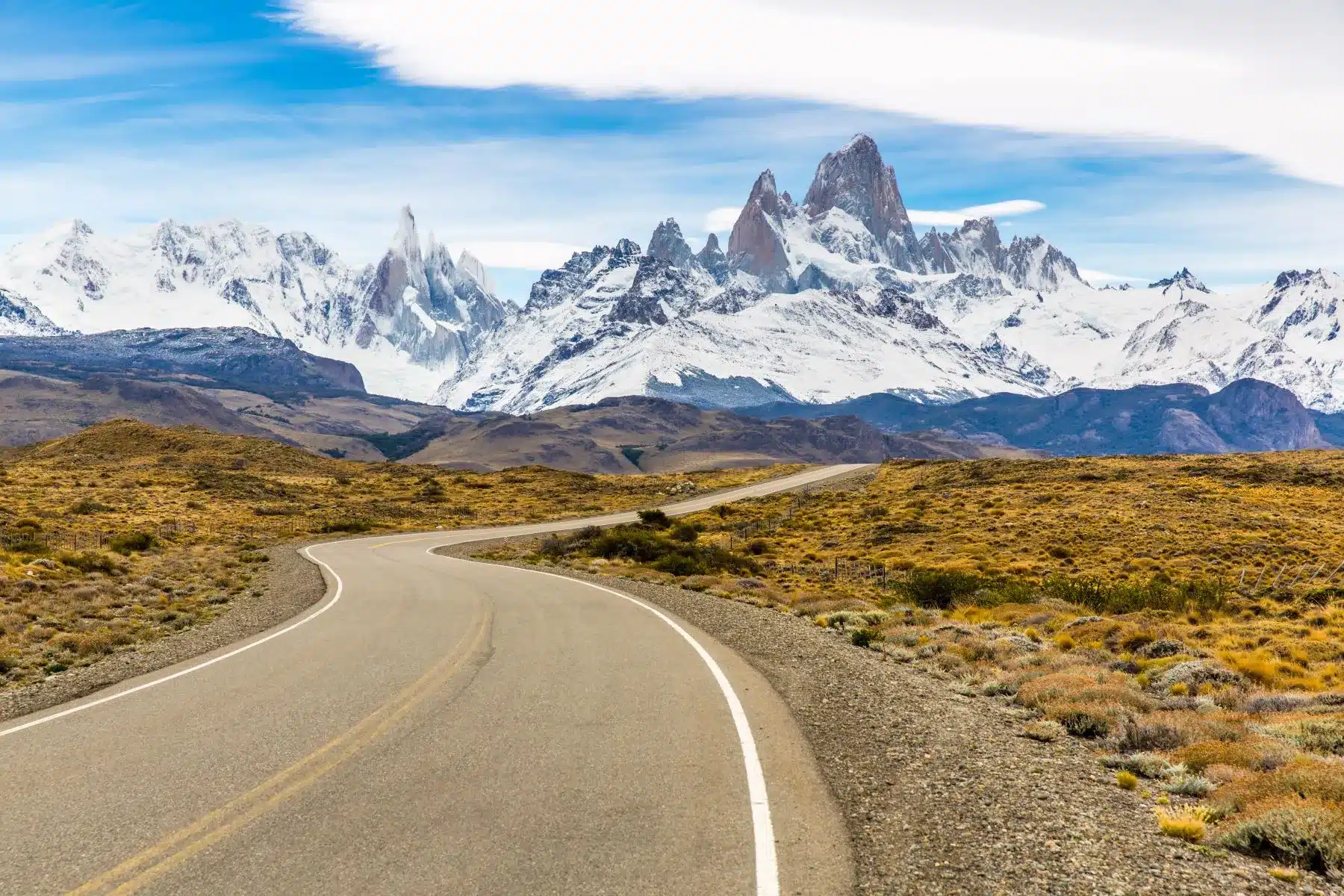 El Calafate to Ushuaia Road Trip Itinerary (15 Days Self-Drive)
El Calafate - El Chaltén - Puerto Natales - Punta Arenas - Ushuaia
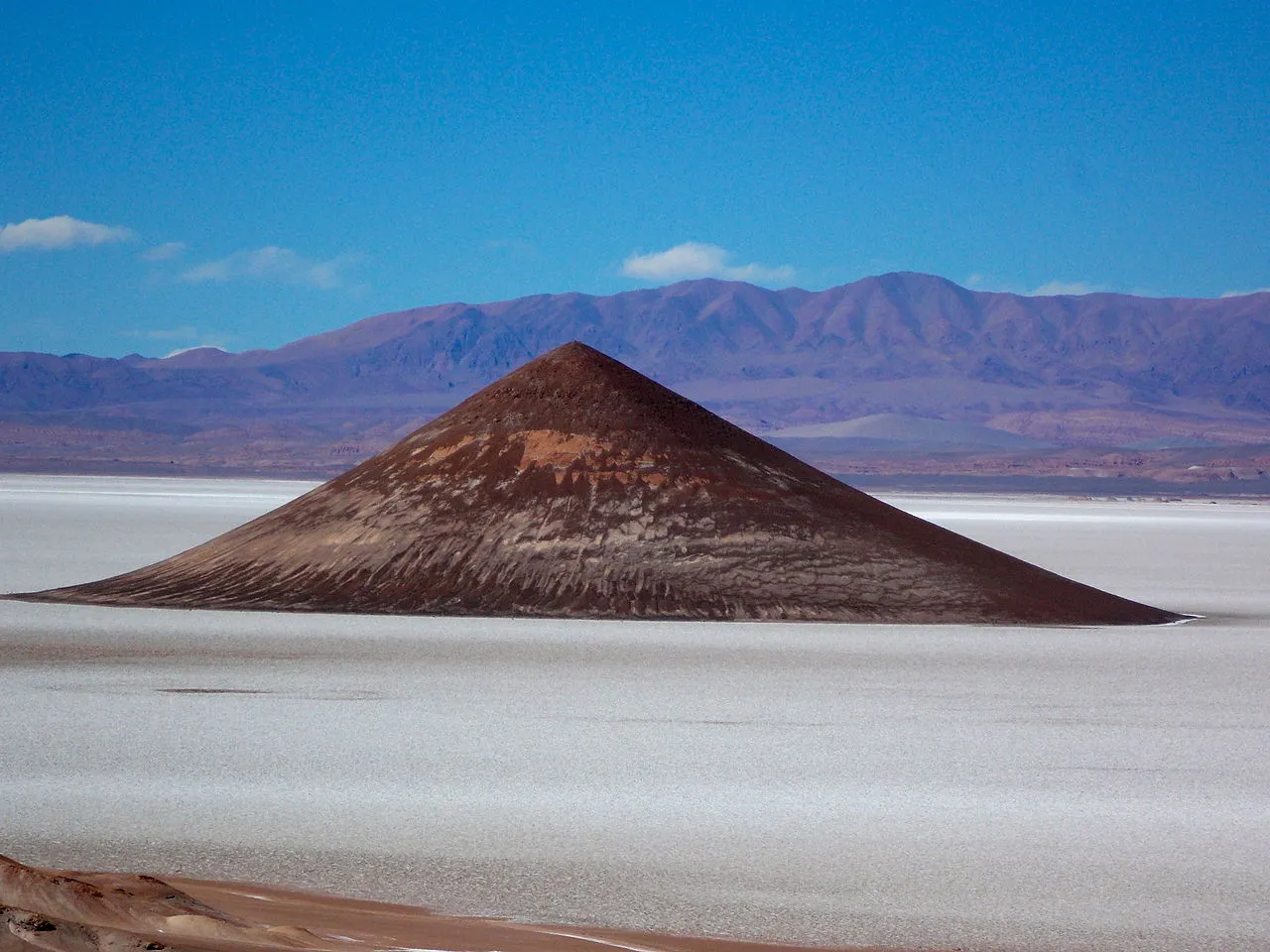 Tolar Grande and the Altiplano: 4×4 crossing
Salta - Cafayate - El Peñon - Tolar Grande - Purmamarca
 Tailor Made Holidays in Mendoza & Buenos Aires
Buenos Aires - Mendoza
 Jujuy & Salta - Hiking & Comfort
Salta - Jujuy
 Argentina Highlights Tour
Buenos Aires - Iguazu Falls - the Northwest - El Calafate - El Chaltén - Ushuaia
Trips by Destination
In the following sections, you'll find tours focused on the main region you want to visit. They include traditional & thematic tours, interesting articles, and relevant information.
- Argentina
Custom-Made Experiences by Locals
 Patagonia
Custom-Made Experiences by Locals
 Chile
Custom-Made Experiences by Locals
 Northwest Argentina Holidays
Custom-Made Experiences by Locals
 Travel to Antarctica
Custom-Made Experiences by Locals
Tours by Travel Style
In the following sections, you'll find tours focused on the main region you want to visit. They include traditional & thematic tours, interesting articles, and relevant information. If your interest is focusing mainly in Chile or Antarctica, please visit our Chile and Antarctica sections.
 Classic Journeys
 Road Trips
 Hiking Adventures
 Wildlife Experiences
 Luxury Escapes
 Foodies
 Honeymoon
 Family Travel
 Cruises